 Arc Raiders
Arc Raiders Breaking New Ground Event Guide
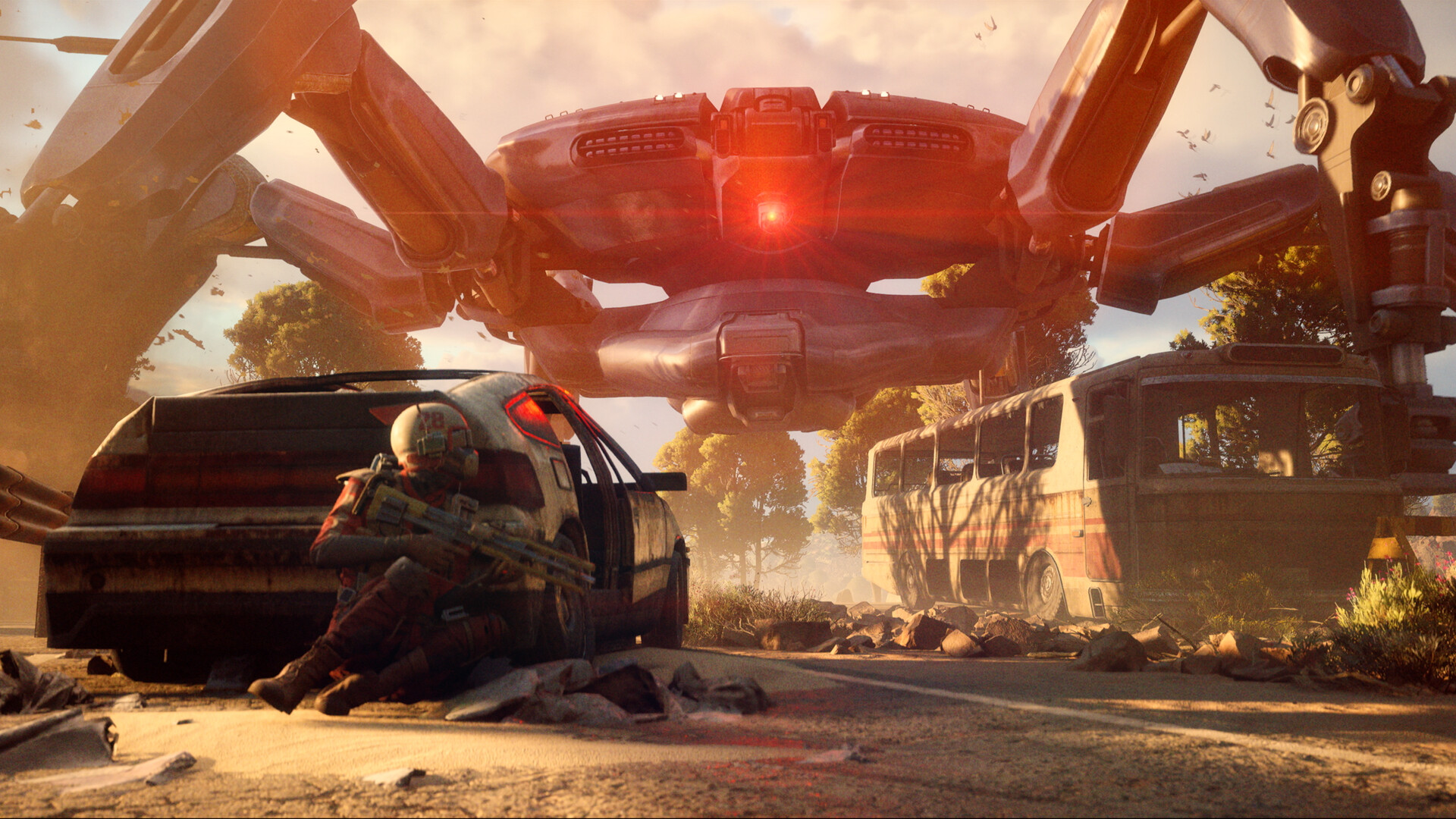
Quick Answer: The Arc Raiders Breaking New Ground Event Guide should help you learn the event loop fast: grab safe starter loot, complete early objectives, avoid reckless fights, and spend your first resources on survivability and mobility.
What Breaking New Ground Means for New Players
Breaking New Ground is best treated like a guided introduction to Arc Raiders’ extraction loop, not a “rush the objective and pray” challenge. ARC Raiders is a multiplayer extraction adventure set on a lethal future Earth, where the machine threat keeps pressure on every run Source. That matters because the event sits inside a game built around tension, scavenging, and getting out alive with your haul intact.
For beginners, the important part is not whether you can win every encounter. It is whether you can leave a raid with something useful, learn the map flow, and keep your stash from collapsing into a pile of random junk. The event rewards players who move deliberately. In practice, that means you want to understand three things early: where low-risk loot usually comes from, which objectives are worth detouring for, and when to bail instead of forcing a bad fight.
A lot of first-timers get trapped by the same instinct: they see a quest marker or event prompt and treat it like a sprint finish. Arc Raiders punishes that mindset. The better approach is to use Breaking New Ground as a training wheel. You are building a repeatable route, not chasing one heroic run. Solo, duo, and trio play all work, so the event can be tackled with a calmer pace if you lean on teamwork or spacing Source. If you are queueing alone, the game is still fully playable, but your margin for mistakes is smaller and your escape plan matters more.
The current public and platform signals also suggest this is a game with an active audience and a lot of room for learning by doing. Steam’s review summary is “Very Positive” at 82.8% positive across 408777 reviews, and there are 25854 players in game right now Source. That does not tell you how to play, but it does tell you one useful thing: there is a large enough player base that the beginner experience is worth taking seriously, because you are not the only one figuring this out.
First-Hour Checklist
Your first hour should be spent learning extraction habits, not memorizing every build or trying to play like a highlight reel. The goal is to leave that first stretch with a usable kit, a sense of what is safe to loot, and a clear understanding of how fast things can go sideways.
1. Do one low-stakes run with the sole goal of extracting
Start with a run where extraction matters more than combat. Pick the easiest route you can manage, loot the obvious containers, and leave the moment your bag has something decent in it. If you find yourself saying “I should probably get out,” that is usually the correct moment to get out.
Use this first run to practice:
- opening your map and checking route options before you move
- identifying nearby sound cues instead of tunnel-visioning on loot
- backing off when ARC pressure becomes awkward
- extracting with whatever you found, even if it feels small
Three concrete examples of the mindset:
- You enter a building, grab the first safe container, and leave instead of chasing the whole structure.
- You hear combat nearby and choose a quieter side path.
- You extract after one clean loop rather than doubling back for one more risky room.
2. Spend the first session learning one map lane, not the whole world
Pick one area and stick to it until it stops feeling alien. New players usually fail because they try to learn routes, threats, loot, and extraction all at once. That is too much cognitive load for a game built around stress.
Focus on one repeatable lane:
- a route with a few reliable containers
- a path with at least one alternative exit
- one space where you know how to break line of sight
Good beginner behavior looks boring on purpose. You are building map memory, not auditioning for a montage. In extraction games, boring often equals alive, and alive is where progress happens.
3. Check your loadout and inventory before every drop
Before you queue, confirm that your kit supports a simple plan. If you have a weapon you are comfortable controlling, a couple of healing or utility items, and enough space to actually bring loot home, you are set. Do not enter with a half-finished inventory just because you are impatient.
A simple pre-drop routine:
- equip your most reliable weapon, not your flashiest one
- keep your inventory clear enough to carry event items
- bring utility you know how to use
- avoid overcommitting crafting materials before you understand their value
If your stash is already crowded, pause and sort it before running again. New players lose more value to clutter than to enemy fire.
4. Use your first encounter to test ARC behavior, then disengage
Your first hostile contact should be observational. Fight just enough to learn how enemies respond, then leave if the situation starts snowballing. The point is not to prove you can win. The point is to understand pacing.
Try to notice:
- how enemies react to noise
- whether your position is actually favorable
- how long it takes to reset after taking damage
- whether the ground gives you cover or just vibes
If you can break contact cleanly once, you are already learning faster than the average new extraction player.
5. Finish the hour by banking what you earned
At the end of your first session, sort the haul and deposit anything that clearly helps your early progression. Do not leave useful materials sitting in limbo because you are “saving them for later.” Later is how beginners end up broke with a very stylish junk drawer.
A practical first-hour finish:
- store stable crafting materials
- keep one solid weapon set
- sell or scrap obvious low-value clutter if the game offers that choice
- note which items felt scarce during the run
That final review is important. The best beginner habit in Arc Raiders is not speed. It is feedback.
You might also like
- Arc Raiders waking the grid quest security sensors security control center traces of breach Beginner Guide
- Arc Raiders naomi kyle reviews your best clips cl1p it with naomi kyle Beginner Guide
- ARC Raiders Arc Raiders gadgets you believed useless but are op in cold snap
- Arc Raiders groundbreaking quest building picture whiteboard photo abandoned housing project Beginner Guide
- Arc Raiders Hurricane Map Condition and First Wave Hidden Cache Locations: Beginner Guide
Resource Priority Order
Your resource priority should lean toward survival, then mobility, then flexibility, with luxury upgrades coming much later. In an extraction game, hoarding the right things is often more important than crafting the newest shiny object.
A useful beginner priority looks like this:
| Priority | What to do with it | Why it matters early | Beginner examples |
|---|---|---|---|
| 1 | Keep healing, ammo, and basic survival supplies | These decide whether you extract or donate your loot to the map | Med items, extra ammo, emergency utility |
| 2 | Hold onto versatile crafting materials | Common materials usually unlock more options than niche scraps | Parts that feed general upgrades, not one-off vanity crafts |
| 3 | Save currency-like progression resources | You want flexibility when you finally find a better weapon or upgrade path | Vendor spend, stash growth, key upgrades |
| 4 | Craft one dependable loadout, not many mediocre ones | One solid kit beats three half-baked experiments | A reliable primary, backup utility, simple support items |
| 5 | Spend on comfort upgrades only after your runs are stable | Luxury is wasted if you keep dying before extraction | Cosmetic or marginal upgrades, optional side investments |
The practical rule is simple: if a resource helps you survive another raid, keep it. If it only looks good on paper, wait until your core loop is stable.
What to hoard first
Hoard anything that improves your ability to leave a raid alive. That usually means healing items, ammunition, and general-purpose crafting material. Beginners often overvalue rare-looking components and undervalue the boring stuff that keeps the engine running. Do not do that. Boring resources are the grease in the machine, and the machine in this game is trying to eat you.
Good hoard examples:
- healing supplies for bad fights and awkward exits
- ammo for the weapon you actually use most
- materials that show up in multiple recipes
- utility items that help you escape or reposition
What to spend early
Spend early on anything that reduces failure rate. If a small upgrade gives you better carrying consistency, a safer escape, or a weapon you can actually control, that is a better buy than something flashy you are not ready to use.
Good early spends:
- a weapon you can reliably win short fights with
- stash or inventory improvements if available
- practical utility that saves raids, not just kills enemies
- upgrades that make your baseline loadout less fragile
What to craft first
Craft one loadout path and stick with it long enough to learn it. Swapping between every gun type and every toy in the workshop is a classic beginner trap. You do not need a museum. You need a setup you can repeat.
Examples of sane first crafts:
- one close-range option and one general-purpose option
- basic healing that you can replace often
- cheap utility you are not afraid to use
- one backup weapon for bad ammo or bad positioning
A good mental check is this: if you crafted it, would you actually bring it into the next three raids? If the answer is no, your resources are probably better saved.
Common Newbie Mistakes
New players usually make the same five mistakes because the game looks more generous than it is at first glance. The fix is not complicated, but you do need to be deliberate.
1. Treating every fight like a must-win fight
Players fall into this because shooting is the loud, obvious part of the game, so it feels like progress. In reality, many beginner losses happen because someone keeps a bad fight going for too long.
Fix: break contact sooner. Move, break line of sight, and leave if the fight is pulling you away from your route or your objective.
2. Looting without an exit plan
This happens when a player opens a container and then mentally commits to the room instead of the extraction. The result is the classic “one more box” spiral.
Fix: decide your exit before you start digging through the area. If the route back is not clear, stop looting and reposition first.
3. Carrying too many different item types
New players keep a little bit of everything because everything looks potentially useful. That turns the stash into a junk-filled decision headache.
Fix: pick a narrow early-use pool. Keep items that support your current loadout and basic survival, then sell, store, or ignore the rest until you know their purpose.
4. Burning rare materials on the first interesting recipe
This usually happens because crafting feels like permanent progress. The problem is that many early recipes are only modest upgrades, while the material cost can be painful.
Fix: ask whether the craft improves extraction success. If it does not help you survive or carry more often, wait.
5. Queueing up underprepared because you are chasing momentum
People do this because they want to stay “in the zone.” But going in tired, half-sorted, or tilted is how you make dumb inventory mistakes and greedy pushes.
Fix: after a rough run, stop and reset your stash, ammo, and route plan. Ten seconds of discipline saves twenty minutes of pain.
Common Mistakes
These are the beginner mistakes that deserve their own callout because they show up over and over in extraction games, and Arc Raiders is no exception.
Overcommitting to noisy areas
The mistake is moving into an active fight or loud objective and staying there too long. Players do this because loot and action are concentrated in the same places, which makes them feel rewarding. The fix is to enter, take what you can safely grab, and leave before the area turns into a stack of bad choices.
Ignoring map exits until the bag is full
The mistake is focusing entirely on loot and only thinking about extraction at the end. Players do this because loot is visible and exits are abstract. The fix is to identify at least two escape routes before you begin looting, then keep one in your head the whole raid.
Using your best gear on learning runs
The mistake is bringing your strongest kit into a run where you still do not know the route. Players do this because better gear feels like a safety blanket. The fix is to learn with a dependable, replaceable setup first, then graduate to expensive gear once your route is stable.
Hoarding dead weight “just in case”
The mistake is filling storage with items you may never use. Players do this because extraction games train you to value scarcity. The fix is to define a purpose for each category in your stash and clear anything that does not support a current goal.
Panicking when ARC pressure spikes
The mistake is freezing when enemies or other players force a bad situation. Players do this because the game can swing from calm to chaos fast. The fix is to pre-decide a simple emergency response: move to cover, break sight lines, heal if needed, and exit the area.
Pro Tips
These tips go beyond the obvious beginner advice and start to matter once you are comfortable surviving the basic loop.
1. Fight for position, not just damage
The best trigger for this mindset is any time you catch an enemy before they catch you. Instead of dumping everything immediately, take the spot that gives you cover, retreat options, or a better angle. A fight from a strong position is often easier to win than a “better” weapon in a bad one.
2. Use the first quiet minute to set your route
At the start of a raid, before the place gets noisy, decide which lane you are taking and which fallback exit you will use if that lane is blocked. That early choice keeps you from wandering into trouble like a tourist with excellent confidence and poor survival instincts.
3. Treat your inventory like a timer
The moment your bag starts filling with useful items, your raid becomes less about exploration and more about cashing out. When you hit that point, slow down and move toward extraction. New players often keep looting past the point where the run is already successful.
4. Build around one weapon you can actually repeat
If a weapon feels great only in perfect conditions, it is not a beginner weapon. Use the gun that stays useful when you are moving, damaged, or under pressure. Consistency beats theoretical damage every time a plan gets messy.
5. Save utility for exits, not only for kills
A lot of players spend their clever items in the first fight because that is where the excitement is. The stronger habit is to keep one escape option in reserve for the final part of the raid. That last push to extract is where bad decisions go to become stories.
6. Learn one “bad situation” path on purpose
Have a route that works when your main plan collapses. This can be a side path, a lower-traffic lane, or just a stretch of cover you know well. It is much easier to stay calm when your brain already has a fallback instead of improvising under fire.
Graduation Threshold
You are out of the beginner phase when you can extract consistently, read danger quickly, and make resource decisions without second-guessing every slot in your stash. This is less about level and more about competence.
A practical way to tell you have graduated:
- you can survive a raid without improvising every movement
- you know which loot is worth detouring for and which is filler
- you can identify when a fight is worth it before it becomes expensive
- your stash has a clear purpose instead of being a dumping ground
- you stop feeling surprised by the basic flow of a run
There is also a useful external signal: Arc Raiders’ achievement data suggests that some progress markers are still uncommon, which is normal for a game with a learning curve. Steam’s global achievement stats show the rarest of the 50 tracked achievements is unlocked by only 0.8% of players Source. That does not define skill, but it does underline the broader point: mastery in this game comes from repeated, informed runs, not from one lucky breakout.
For beginner timing, HowLongToBeat reports roughly 38.43 hours for the main story, 73.74 hours with extras, and 157.95 hours for completion Source. Those numbers are not a skill benchmark, but they do tell you this is not a one-evening toy. If you are already making smart extraction calls after a few sessions, you are progressing at the right pace.
A good graduation test is simple: can you enter with a plan, adapt when that plan gets interrupted, and still leave with value? If yes, you are past beginner territory. At that point, the game starts shifting from “how do I survive” to “how do I optimize my route, loadout, and objective order.”
Related Guides
These are the next internal links that fit naturally after a beginner event guide.
- Arc Raiders Early Game Tier Guide
- Arc Raiders Best Beginner Loadouts
- Arc Raiders Extraction Route Walkthrough
- Arc Raiders Weapons and Builds Guide
- Arc Raiders Solo Play Tips
- Arc Raiders Crafting and Economy Guide
Sources
See also
- Arc Raiders paving the way quest guide enelica building researcher flat
- Arc Raiders flickering flames event exactly needed dlc free update Beginner Guide
- Arc Raiders how unlock azimuth outfit archeologist backpack the finals crossover Beginner Guide
- Arc Raiders 10 biggest regrets of a players wish i knew sooner: Beginner Guide
- Arc Raiders new steam game like minecraft dwarf delve extraction Beginner Guide
- Arc Raiders loadout best pve pvp ferro cost free good op Beginner Guide
- ARC Raiders How to Complete Trials This Week Jan 5 to 12
- Arc Raiders gamers into voice actors cl1p it with naomi kyle Beginner Guide
- Arc Raiders keeping the memory quest helmet formicai hills location
- Arc Raiders Expedition Guide: How to Complete All Expedition Steps Rewards and Reset Details
Screenshots


Reviewed by
Arc Raiders Hub Editorial
Expertise: Editorial team behind Arc Raiders Hub. Content is compiled from official patch notes, community wikis, and playthrough notes, then reviewed and updated on schedule.
Sources
ARC Raiders Progression Guides →
Browse the complete progression collection and its focused guides.
Related Guides


%27/><stop offset=%271%27 stop-color=%27hsl(320,50%,18%)%27/></linearGradient></defs><rect width=%27460%27 height=%27215%27 fill=%27url(%23g)%27/><text x=%27230%27 y=%27115%27 text-anchor=%27middle%27 font-family=%27sans-serif%27 font-size=%2724%27 font-weight=%27700%27 fill=%27rgba(255,255,255,0.85)%27>App 1808500</text><text x=%27230%27 y=%27142%27 text-anchor=%27middle%27 font-family=%27sans-serif%27 font-size=%2711%27 fill=%27rgba(255,255,255,0.6)%27>no image yet</text></svg>)
🔥 Popular Guides
arc raiders patch notes april 21: Patch Notes Explained
ARC Raiders April 21 patch explained: Store Update 1.43.0, Roamer Set, Phantom Targets Event, delayed rotation, and player action items.
ARC Raiders Beginner Guide: Getting Through the First Hours
Learn early survival, resource priorities, and enemy behavior tips for ARC Raiders beginners.
arc raiders kettle nerf patch notes: Patch Notes Explained for Store Update 1.43.0
Store Update 1.43.0 adds Roamer Set and Phantom Targets event, with restart-required rollout details and player actions.
ARC Raiders patch notes and updates: Store Update 1.43.0 explained
Store Update 1.43.0 adds the Roamer Set, Phantom Targets Event, and Anomalia Outfit. Learn what changed and what to do now.
📋 Patch Notes & Updates
🛠️ Popular Tools
Was this guide helpful?
Rate this guide so we can improve it.
Share your own tip
Found something not in the guide? Submit it below — our editors review every tip before publishing. No account required.