 Arc Raiders
Arc Raiders Blue Gate Communication Tower Key Beginner Guide
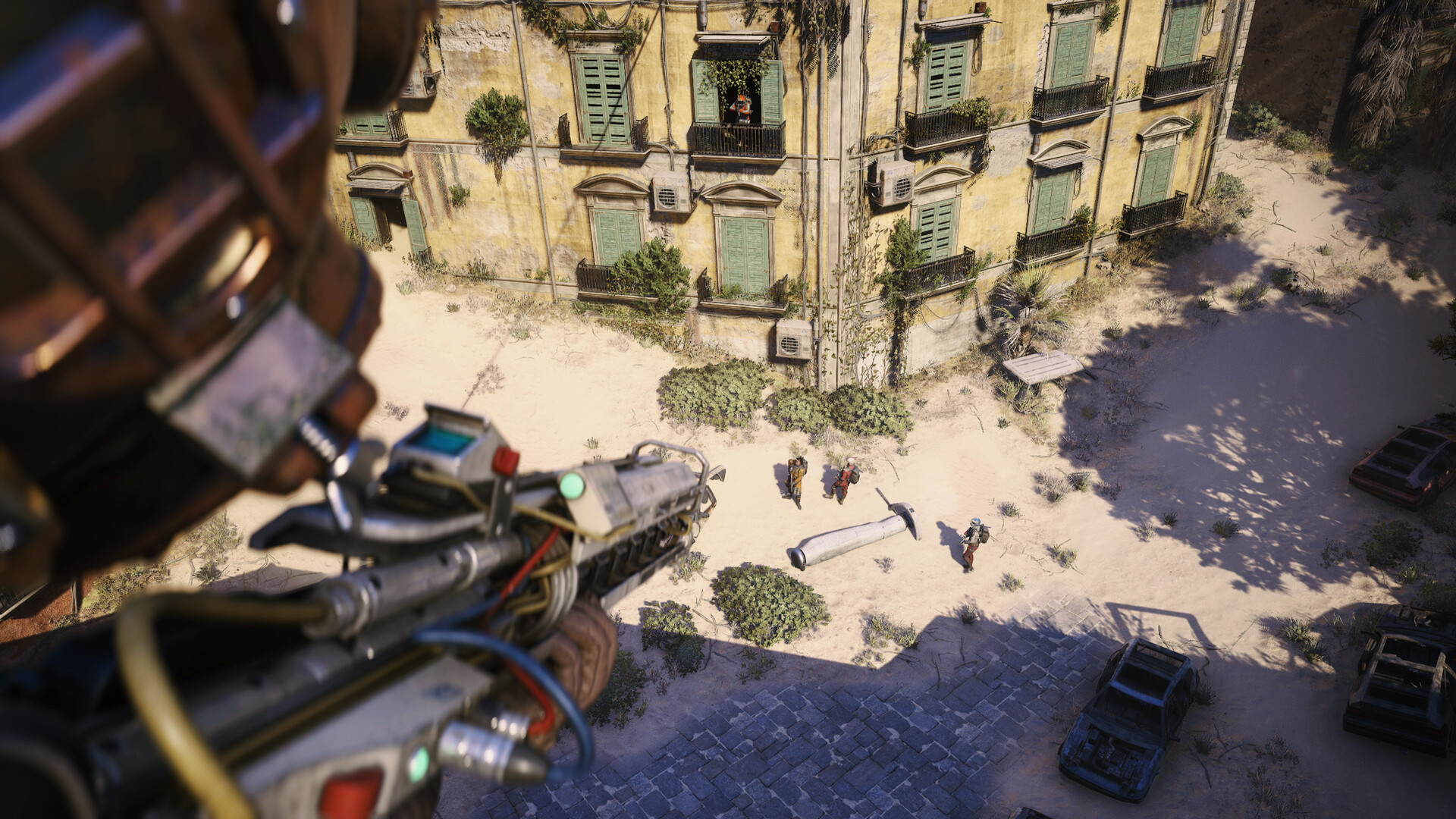
Quick Answer: The Arc Raiders Blue Gate Communication Tower Key opens a locked area in Blue Gate, letting you grab higher-value loot and quest progress early; treat it as a mid-risk priority item, not something to burn on your first reckless run.
What This Key Is For
The Arc Raiders Blue Gate Communication Tower Key is a route unlock, not a power spike by itself. Its value comes from what it lets you access: a locked tower room, a cleaner loot loop, and a safer way to turn a decent run into a profitable one if you already understand extraction basics.
That matters because ARC Raiders is an extraction adventure set on a lethal future Earth under a mechanized threat called ARC Source. In that kind of game, the best early wins are not flashy firefights. They are short, controlled raids where you enter with a plan, take one valuable objective, and leave before your inventory or nerves get overloaded.
For new players, the Communication Tower Key should be read as a progression tool. It is most useful when you can already do three things consistently:
- Move through a map without panicking every time you hear combat.
- Identify when to loot and when to leave.
- Survive long enough to extract with items that matter.
It is easy to misunderstand keys in extraction shooters. A locked room feels special, so beginners often treat it like a “must open immediately” item. That is usually the wrong instinct. A key is only worth using when you can protect the time investment. If Blue Gate is already hot with players, or your backpack is full of mixed junk, opening the tower can become a trap instead of an upgrade.
The better approach is to treat the Arc Raiders Blue Gate Communication Tower Key like a scheduled run objective. Bring it when you can make a straight beeline for Blue Gate, clear the area around the tower, loot fast, and exit with enough space left to justify the detour. If you are still learning map flow, save it until you have a calmer route and a better sense of where other Raiders tend to rotate.
First-Hour Checklist
Your first hour should be spent learning survival habits, not chasing perfect loot routes. The quickest improvement comes from a short loop of preparation, low-stakes combat, and extraction practice.
1. Do a low-risk loadout run first
Start with a loadout you can afford to lose. In extraction games, the first mistake is often bringing “good enough” gear that is still too valuable for your current comfort level. Use simple weapons, basic healing, and only the utility you understand. If the game gives you multiple viable tool choices, pick the one that is easiest to use under pressure.
Examples of what this looks like:
- A basic rifle or controllable close-range weapon instead of a fancy weapon you do not yet handle well.
- Minimal healing items plus one escape-oriented utility.
- A backpack layout that leaves room for whatever you find on the way out.
The point is to learn the map and encounter rhythm. Early success comes from information, not from maximizing damage numbers you cannot yet exploit.
2. Learn one route to and from Blue Gate
Do not try to memorize the whole map on day one. Pick one route into Blue Gate, one route out, and one fallback route if another squad blocks your path. For the Arc Raiders Blue Gate Communication Tower Key specifically, this is non-negotiable: the key only pays off when you can reach the tower, unlock it, and escape without improvising every turn.
A good beginner route has three properties:
- It avoids the most obvious conflict choke points.
- It gives you cover or concealment while you move.
- It has a clear extraction fallback if your first plan fails.
Run that route several times without using your key if needed. This is how you learn timing. Once you know where ambushes and bottlenecks happen, the tower key becomes useful instead of risky.
3. Spend the first run testing sound and threat recognition
ARC Raiders is built around reading danger quickly. Spend your first hour learning what hostile movement sounds like, how ARC pressure feels compared with player pressure, and how far you can move before you are in trouble. That judgment matters more than raw aim in the beginning.
Watch for three kinds of triggers:
- Distant engagement noise that means the area is not clear.
- Suspiciously quiet spaces that may still hide players.
- ARC encounters that can escalate if you overcommit to the fight.
If you can tell the difference between “I can pass through this” and “this fight will cost me the run,” you are already ahead of many new players.
4. Open the tower only when the run is already stable
Do not make the Communication Tower your opening move unless the match state is unusually safe. The smarter use of the key is after you have already gathered a few useful items, checked your backpack space, and confirmed that the extra detour will still be worth the return trip.
A stable run usually means:
- You have room in your inventory.
- You have healing left.
- You have not revealed your position through repeated unnecessary fighting.
- You know where your extraction plan is.
If those conditions are not true, skip the tower for that run and bank survival over curiosity.
5. Extract once, then review what went wrong
Your first hour should end with at least one extraction attempt that you can evaluate honestly. What got you hit? Where did you hesitate? Did you open your inventory too often in unsafe spaces? Did you chase one fight and lose the run?
That review matters because beginners improve fastest by correcting one mistake at a time. In a game with high stakes and limited carry capacity, surviving with a modest haul is often better than dying with an almost-good haul.

You might also like
- Arc Raiders waking the grid quest security sensors security control center traces of breach Beginner Guide
- Arc Raiders naomi kyle reviews your best clips cl1p it with naomi kyle Beginner Guide
- ARC Raiders Arc Raiders gadgets you believed useless but are op in cold snap
- Arc Raiders Hurricane Map Condition and First Wave Hidden Cache Locations: Beginner Guide
- Arc Raiders groundbreaking quest building picture whiteboard photo abandoned housing project Beginner Guide
Resource Priority Order
Your best early resources are survival tools, mobility tools, and reliable crafting materials, in that order. If you spend in the wrong sequence, you slow your ability to make future runs easier.
What to hoard first
Hoard anything that extends survival or reduces loss. That includes healing, escape utility, and materials that are commonly used in early upgrades. In practice, this means you should be conservative with:
- Meds and restorative items.
- Crafting materials that unlock repeatable progression.
- Keys and access items, including the Arc Raiders Blue Gate Communication Tower Key.
- Ammunition for weapons you already use well.
The beginner trap is selling or using everything that looks immediately valuable. That feels productive, but it often leaves you unprepared for the next run. A small reserve is what keeps a rough session from becoming a dead end.
What to spend first
Spend first on anything that increases your ability to survive multiple encounters. If the game gives you choices between cosmetic, convenience, and combat-relevant upgrades, prioritize the combat-relevant ones until your fundamentals are stable.
A practical priority order looks like this:
| Priority | Spend On | Why It Comes First | Beginner Example |
|---|---|---|---|
| 1 | Healing and recovery | Lets you recover from small mistakes | Extra meds before a risky key run |
| 2 | Basic combat loadout | Keeps your gear usable under pressure | A weapon you can reliably control |
| 3 | Mobility or escape utility | Helps you disengage and extract | Anything that buys space or time |
| 4 | Crafting inputs for repeat value | Supports future runs | Materials that feed upgrades or replacements |
| 5 | Access items and keys | Only profitable if you can exploit them | Blue Gate tower key after route practice |
The logic here is simple: a key is not a foundation. It is a multiplier. If your underlying run quality is poor, the multiplier does very little.
What to craft first
Craft the items you burn through fastest in real play. New players often overvalue rare-looking gear and undervalue repeatable essentials. That usually leads to a situation where they have one impressive item and no budget for the next three runs.
Good first crafts tend to be:
- Healing supplies you use after every rough encounter.
- Basic ammunition for your most comfortable weapon.
- Utility that helps you leave fights on your own terms.
- Low-risk loadout pieces that keep entry cost manageable.
For the Arc Raiders Blue Gate Communication Tower Key, the real question is not “Can I open the door?” It is “Can I enter with enough support items to survive the detour and still leave with something worth keeping?” If the answer is no, your crafting priority is still survival gear, not more ambitious access.
What not to spend early
Do not overinvest in one-off luxury items before you understand route quality. You also should not sink all your value into a single high-stakes run just because you own a key. A key is safest when it sits inside a prepared economy: enough healing, enough ammo, enough room, and enough map knowledge to convert the opportunity into a win.
If the game offers tradeoffs between immediate power and long-term flexibility, the long-term flexibility usually wins for beginners.
Common Mistakes
New players usually lose value through overconfidence, poor route discipline, and bad inventory habits. The fixes are straightforward once you know what to look for.
1. Using the tower key on a chaotic run
Beginners often open the Blue Gate tower the first moment they reach it, even when the area is active and their inventory is already half-full of low-value loot.
Why it happens: The key feels rare, so players want immediate payoff.
Concrete fix: Hold the Arc Raiders Blue Gate Communication Tower Key until you have a calm route, at least one extraction plan, and enough free inventory space to make the detour worthwhile.
2. Fighting every threat instead of choosing one
New players often engage both ARC enemies and other Raiders when they should simply pass through.
Why it happens: It is easy to confuse confidence with progress, and shooters reward aggression in other contexts.
Concrete fix: Fight only when the encounter is likely to protect a stronger objective, like a high-value loot stop or a safe exit. If the fight does not improve your extraction odds, avoid it.
3. Bringing too much value into the raid
Beginners frequently enter with their best items, then lose them to a mistake that would have been survivable with a cheaper loadout.
Why it happens: Good gear makes players feel more secure.
Concrete fix: Use a “good enough” kit for learning runs and reserve premium items for routes you already know. Keep your best loadout for the raid where you can actually protect it.
4. Ignoring inventory management until it is too late
Players often keep looting until the last minute, then realize they have no room for the thing they actually wanted.
Why it happens: Loot feels free until extraction pressure starts.
Concrete fix: Pause after each meaningful pickup and compare what you already have against what you expect to find next. If you are carrying filler, dump it before you enter a key room.
5. Not learning one reliable extraction path
A lot of beginners know where points of interest are, but not how to leave them safely.
Why it happens: The map is more exciting than the exit.
Concrete fix: Practice a single route in and out of Blue Gate until you can move it under pressure. A key room is only valuable if your exit is already solved.
6. Wasting healing too early
Players sometimes burn recovery items after the first scratch and end up empty when the real problem starts.
Why it happens: Early panic creates a false sense of urgency.
Concrete fix: Use healing after the fight state is stable enough that you know you will not immediately need to run or re-engage. Save at least one recovery option for the final stretch home.
7. Treating the tower room like a guaranteed jackpot
Beginners can overestimate locked rooms and assume every key use will produce major loot.
Why it happens: Locked content suggests exclusivity.
Concrete fix: Treat the tower as a value opportunity, not a promise. If the run is already weak, it is often better to leave with a smaller gain than force a bad key use.
Pro Tips
The best beginner upgrades are not always bigger guns or rarer loot; they are better timing, cleaner decisions, and fewer wasted openings. These tips are aimed at making the Communication Tower key more profitable in real runs.
1. Use the key only after the area has “quieted down”
If you hear repeated combat nearby, wait it out rather than rushing the tower. A short delay often costs less than getting pinned in a locked room with no exit control.
2. Clear your backpack before you go near the tower
When you are close to the Blue Gate tower, stop and sort your inventory. If you go in with clutter, you will be forced into bad decisions the moment you see a valuable item.
3. Save one escape option for after the loot phase
A common beginner error is using every tool during the approach and having nothing left for extraction. Keep one answer for bad timing, whether that is healing, a movement tool, or a disengage option.
4. Approach the tower with a “leave early” mindset
You do not need to clear the entire map before opening a locked room. Enter, loot the highest-value items you can identify quickly, then leave while the route is still manageable.
5. Learn the difference between noise and threat
Not every sound means immediate danger. Some of the biggest beginner losses happen when players overreact to harmless background activity and reveal their position for no gain.
6. Pair the key run with a simple quest or objective
If you have another reason to go to Blue Gate, combine the objectives. One efficient raid is worth more than two fragmented ones, especially while you are still learning route safety.
7. Check your confidence after a successful extraction
A clean extraction after using the tower key can make you overestimate your readiness. The next run should test whether that success came from strong execution or from a lucky lobby state.
Graduation Threshold
You are out of the beginner phase when you can convert risky objectives into repeatable, controlled extractions. For the Arc Raiders Blue Gate Communication Tower Key, that means you are no longer asking whether the room is accessible; you are asking whether the route is efficient, safe, and worth the time.
A practical graduation test looks like this:
- You can enter Blue Gate with a plan and leave with a usable haul more often than not.
- You know when to ignore combat instead of forcing it.
- You can manage inventory without panic.
- You can use a key and still extract profitably afterward.
- You understand which losses were avoidable and which were just normal raid variance.
When you reach that point, the Communication Tower key stops being a special beginner item and becomes just another option in your routing toolkit. That is the real sign of progress in an extraction game: items become tools, not goals.
There is also a broader indicator. ARC Raiders has a steep learning curve, but the game’s long-tail structure rewards players who move from “trying to survive” to “choosing the shape of the run.” Once you start doing that consistently, you are no longer a beginner even if your aim is still improving.
Another useful benchmark is how you react to setbacks. Beginners usually treat a lost key run as proof the item was wasted. More experienced players treat it as one data point: Was the route too hot? Did they carry too much? Did they open too early? If you can answer those questions calmly, you are already past the early phase.
Related Guides
These sibling guides fit naturally next to this one and are the best follow-ups for a new ARC Raiders player:
- ARC Raiders Early Loot Route Guide
- ARC Raiders Best Beginner Loadouts
- ARC Raiders Blue Gate Map Walkthrough
- ARC Raiders Extraction Basics Guide
- ARC Raiders Keys and Locked Rooms Guide
- ARC Raiders Solo Play Beginner Guide
Sources
See also
- Arc Raiders flickering flames event exactly needed dlc free update Beginner Guide
- Arc Raiders paving the way quest guide enelica building researcher flat
- Arc Raiders how unlock azimuth outfit archeologist backpack the finals crossover Beginner Guide
- Arc Raiders 10 biggest regrets of a players wish i knew sooner: Beginner Guide
- Arc Raiders new steam game like minecraft dwarf delve extraction Beginner Guide
- ARC Raiders How to Complete Trials This Week Jan 5 to 12
- Arc Raiders loadout best pve pvp ferro cost free good op Beginner Guide
- Arc Raiders gamers into voice actors cl1p it with naomi kyle Beginner Guide
- Arc Raiders Expedition Guide: How to Complete All Expedition Steps Rewards and Reset Details
- Arc Raiders keeping the memory quest helmet formicai hills location
Screenshots



Reviewed by
Arc Raiders Hub Editorial
Expertise: Editorial team behind Arc Raiders Hub. Content is compiled from official patch notes, community wikis, and playthrough notes, then reviewed and updated on schedule.
Sources
ARC Raiders Progression Guides →
Browse the complete progression collection and its focused guides.
Related Guides

%27/><stop offset=%271%27 stop-color=%27hsl(320,50%,18%)%27/></linearGradient></defs><rect width=%27460%27 height=%27215%27 fill=%27url(%23g)%27/><text x=%27230%27 y=%27115%27 text-anchor=%27middle%27 font-family=%27sans-serif%27 font-size=%2724%27 font-weight=%27700%27 fill=%27rgba(255,255,255,0.85)%27>App 1808500</text><text x=%27230%27 y=%27142%27 text-anchor=%27middle%27 font-family=%27sans-serif%27 font-size=%2711%27 fill=%27rgba(255,255,255,0.6)%27>no image yet</text></svg>)

🔥 Popular Guides
arc raiders patch notes april 21: Patch Notes Explained
ARC Raiders April 21 patch explained: Store Update 1.43.0, Roamer Set, Phantom Targets Event, delayed rotation, and player action items.
ARC Raiders Beginner Guide: Getting Through the First Hours
Learn early survival, resource priorities, and enemy behavior tips for ARC Raiders beginners.
arc raiders kettle nerf patch notes: Patch Notes Explained for Store Update 1.43.0
Store Update 1.43.0 adds Roamer Set and Phantom Targets event, with restart-required rollout details and player actions.
ARC Raiders patch notes and updates: Store Update 1.43.0 explained
Store Update 1.43.0 adds the Roamer Set, Phantom Targets Event, and Anomalia Outfit. Learn what changed and what to do now.
📋 Patch Notes & Updates
🛠️ Popular Tools
Was this guide helpful?
Rate this guide so we can improve it.
Share your own tip
Found something not in the guide? Submit it below — our editors review every tip before publishing. No account required.