 Arc Raiders
ARC Raiders arc raiders patch notes january 6th Patch Notes Explained
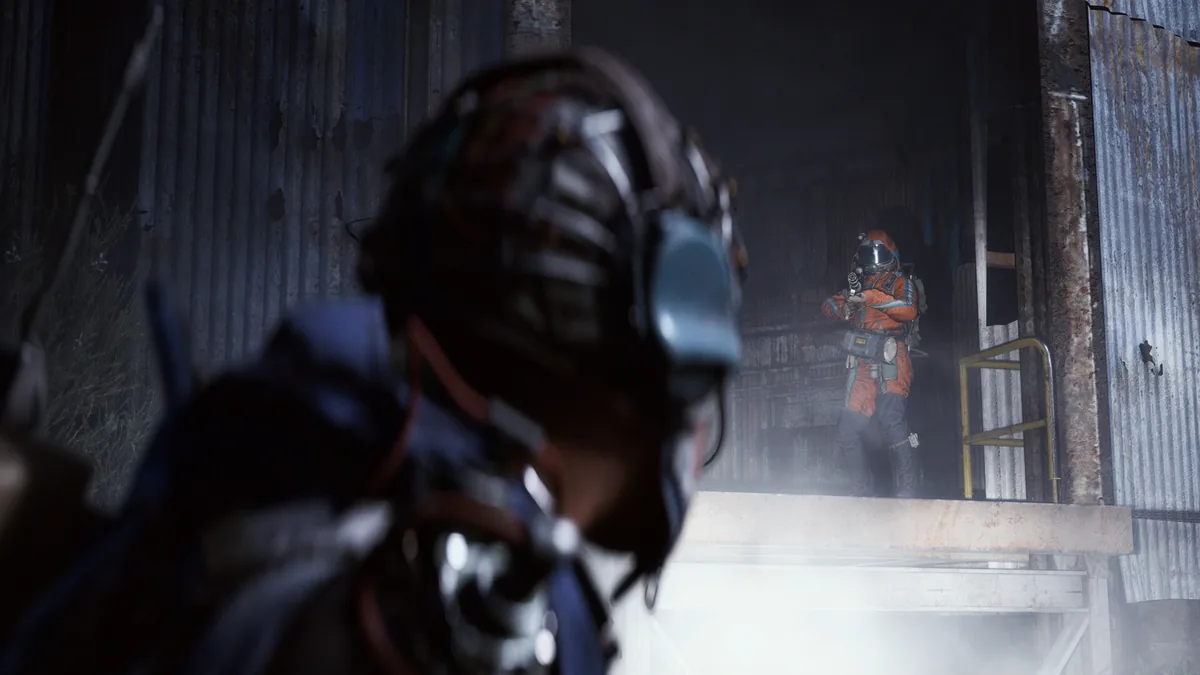
Quick Answer: The arc raiders patch notes january 6th update is a hotfix-style patch that removed an out-of-bounds Stella Montis zipline exploit, fixed Blue Gate wall collision, repaired bullet/ARC-vision blocking materials, and patched a Spaceport Launch collision gap.
TL;DR: what the January 6th ARC Raiders update changed
The arc raiders patch notes january 6th update is a stability-and-map-integrity patch, not a content-heavy balance pass. Based on the patch context available here, the most important shipped changes were exploit fixes and collision repairs: one zipline was removed from Stella Montis because it let players leave the playable space, Blue Gate got a wall collision fix that had allowed vaulting through and falling out of the map, multiple objects were corrected so they properly block bullet fire and ARC vision, and Spaceport Launch received a collision gap fix. The update was pushed live as a Steam announcement telling players to restart their client to download the changes, which is usually the clearest sign that this is an immediate hotfix rather than a delayed content drop. Source
If you are scanning the January 6th notes for meta-shifting buffs or sweeping nerfs, this is not that kind of patch. It is much more about closing loopholes that could invalidate firefights, let Raiders bypass intended routes, or create unfair sightline abuse. In practical terms, that means the map rotation matters a little more now because any route you used for out-of-bounds movement or cheeky flank angles may no longer exist. It also means players who rely on terrain-based cover should be paying attention to whether bullets and ARC detection are behaving more consistently after the material fixes.
For context, ARC Raiders is still a live, heavily played extraction shooter, and public data shows the game sits at 86/100 on Metacritic across 65 professional reviews Source. Steam review data also shows a Very Positive reception with 82.3% positive across 412554 reviews Source. That matters because patches like this usually aim to protect the fairness that keeps an extraction game healthy.
What shipped in the January 6th patch, in plain English
The January 6th ARC Raiders patch shipped a targeted set of map and collision fixes that focus on fair play and reliability rather than new weapons or economy changes. The patch note excerpt points to four specific areas: Stella Montis, Blue Gate, Spaceport Launch, and a set of object-material problems that interfered with bullet blocking and ARC vision. Source
The fixes, broken down
- Stella Montis: a zipline that let players get out of bounds was removed.
- Blue Gate: collision was fixed where players could vault and fall through a wall.
- Material issues: multiple objects were repaired so they now block bullet fire and ARC vision correctly.
- Spaceport Launch: a collision gap was fixed.
Those are the kinds of changes that often look small on paper but feel huge in-game. In extraction shooters, a single collision seam can decide whether a squad escapes, whether a sniper shot should have been blocked, or whether an ARC patrol sees you through cover. Fixing that kind of geometry keeps engagements honest.
Because the patch announcement specifically says to restart your client, this update was deployed as a live hotfix. That usually means the team wanted the fixes in circulation immediately, likely because the exploit and collision issues were prominent enough to affect matches right away. The wording also implies the patch was pushed with minimal ceremony: no long feature list, no new progression layer, just focused maintenance. That is often how studios handle map exploits once they are confirmed.
If you are tracking patch history, the public patch notes repository is the main reference point for this sort of update, since the ARC Raiders patch notes page is described as a list of every public update and patch made to the game. Source
You might also like
- Arc Raiders waking the grid quest security sensors security control center traces of breach Beginner Guide
- ARC Raiders: Arc Raiders The Already Great State of the Turn-Based Tactics Genre
- Arc Raiders naomi kyle reviews your best clips cl1p it with naomi kyle Beginner Guide
- ARC Raiders Arc Raiders gadgets you believed useless but are op in cold snap
- Arc Raiders groundbreaking quest building picture whiteboard photo abandoned housing project Beginner Guide
Winners: who got buffed, and what new utility players gained
The biggest winners in the January 6th ARC Raiders patch are honest players who use normal routes, normal cover, and normal line-of-sight rules. There are no direct weapon buffs here, but the practical buffs are real: better map integrity, fewer exploit angles, and cleaner combat readability. That means squads fighting in Stella Montis, Blue Gate, and Spaceport Launch should see fewer “unfair” moments where someone appears from outside the map or slips through geometry.
Players using standard cover and sightlines
The first group that benefits is anyone who relies on the game’s intended combat language: peek from cover, break line of sight, reposition, repeat. When objects now block bullet fire and ARC vision properly, a crate, wall panel, or piece of map clutter should behave more consistently. In an extraction shooter, that consistency is basically a stealth buff to every tactical player who wants predictable outcomes.
Concrete examples of this kind of benefit include:
- Taking cover behind a piece of environment that now correctly blocks incoming fire.
- Breaking ARC vision behind repaired map props instead of being revealed through them.
- Winning a firefight in a lane that previously had a bad collision seam or gap.
That is especially relevant in team play. ARC Raiders can be played solo or in teams of two or three, so fair cover matters across all squad sizes. Source A solo Raider has less room to absorb a bad collision bug than a three-stack can, which is why these fixes feel bigger the more often you play alone.
Players on Stella Montis, Blue Gate, and Spaceport Launch
The second group that benefits is anyone regularly farming or fighting on the affected maps. These locations are now less likely to produce out-of-bounds abuse, accidental wall phasing, or visual confusion from bad material behavior. That does not make the maps “new,” but it does make them cleaner.
Useful examples:
- Stella Montis: a removed zipline means fewer escape routes that break intended map boundaries.
- Blue Gate: the wall collision fix should reduce the chance of vaulting into a fall-through state.
- Spaceport Launch: repairing a collision gap should help stabilize route safety in that zone.
That is a quiet win for route planners. If you spend time learning rotations, extraction timing, and safe push lanes, the patch rewards that investment. You are less likely to get punished by geometry itself.
Players who care about fair detection
The third group that benefits is anyone who cares about ARC detection behaving consistently. The note about multiple objects not blocking ARC vision suggests the devs were addressing stealth and enemy-awareness problems, not just bullet collision. That matters because ARC Raiders lives and dies on readable stealth. If the environment fails to hide you when it should, every rotation becomes riskier than designed.
Here is a quick clarity table for the winners side of the patch:
| Beneficiary | What improved | Why it matters in matches |
|---|---|---|
| Solo Raiders | Fewer exploit deaths and cleaner cover behavior | Solo survival depends on reliable geometry |
| Duo/Trio squads | Better team fights around map objects | Squad pushes need predictable bullet blocking |
| Route learners | Less risk of route-breaking collision bugs | Practice runs become more transferable to live raids |
Losers: what got nerfed, removed, or shut down
The main losers in the January 6th ARC Raiders patch are exploit users, out-of-bounds abusers, and anyone who had been leaning on collision bugs to gain an unfair angle. This update does not look like a classic combat nerf, but it absolutely nerfs behavior that was breaking the intended rules of engagement.
Out-of-bounds movement got hit hard
The clearest removal is the Stella Montis zipline that allowed players to get out of bounds. That is a straightforward loss for anyone using the map’s vertical traversal as a shortcut into unintended territory. In practical terms, this means:
- no more using that zipline to bypass route boundaries,
- fewer chances to scout from illegal positions,
- less ability to ambush teams from off-map angles.
Those are significant removals because out-of-bounds access can affect both combat and information. A player outside the map can sometimes see or hear things they should not, reach positions that are impossible to contest, or survive routes that were never meant to be survivable.
Collision abusers lost a wall-phase trick
Blue Gate’s collision fix hits another familiar exploit category: vaulting into geometry and falling through a wall. This sort of bug often gets used for:
- shortcut access,
- hiding spots that should not exist,
- accidental escapes from pressure,
- and, in the worst cases, combat resets that nullify a good push.
When a patch closes that hole, it removes a whole class of “free” movement abuse. Players who mastered the bug may feel like they lost a tool, but from a competitive standpoint it is a healthy loss. Extraction shooters are already tense enough without adding unreliable map clipping into the mix.
Environmental weirdness lost some power
The material fixes also indirectly nerf any loadout or strategy that depended on broken cover behavior. If a prop was not blocking bullet fire properly before, players who knew the bad angle may have used it to shoot through what looked like solid cover. If ARC vision failed to respect an object, stealth routes could become inconsistent. Either way, the patch removes those edge cases.
This is the sort of change that can quietly affect PvP and PvE at the same time. Examples include:
- a corner that used to be “fake safe” because bullets slipped through it,
- an object that failed to hide a Raider from ARC line-of-sight,
- a route that relied on visual obstruction behaving incorrectly.
The patch is also a loss for speedrunners of local knowledge. In extraction games, some players build their identity around weird angles and movement tech. Once those are patched out, those routes stop being reliable.
Here is a compact look at the downside side of the update:
| Removed or fixed exploit | What players lost | Likely impact |
|---|---|---|
| Stella Montis out-of-bounds zipline | Illegal map access | Fewer off-map scouting and escape options |
| Blue Gate wall vault/fall-through | Collision abuse route | Less shortcutting and bug-based hiding |
| Bad material blocking | Through-objects peeks | Cleaner, more honest firefights |
What you should do differently starting today
You should stop routing around the patched exploits and start treating the affected maps as more trustworthy but less forgiving. The January 6th ARC Raiders patch does not demand a full loadout rebuild, but it does change how you should move, scout, and fight in Stella Montis, Blue Gate, and Spaceport Launch. If you were using any path that depended on broken geometry, replace it now before it becomes muscle memory.
Re-check your movement routes
The first action item is simple: test your usual travel lines again.
- If you used the Stella Montis zipline for a shortcut, delete that route from your rotation notes.
- If you had a Blue Gate vault line that touched the repaired wall, assume that route is dead until you verify it in live play.
- If you relied on a Spaceport Launch seam for fast movement or sneaky repositioning, re-run your path in a low-risk raid.
This is especially important if you play in a duo or trio and one person is responsible for “calling” the route. A single outdated movement call can sink a raid if the patch changed a jump, a ledge, or a sightline.
Re-learn your cover logic
The second action item is to revisit any cover spots that previously felt inconsistent. Because multiple objects were fixed so they block bullet fire and ARC vision correctly, some “safe” positions may now work the way you always thought they did, while some old cheese angles will no longer function.
Good places to re-test:
- object-heavy lanes with stacked props,
- corners where you used to get strange hit registration through scenery,
- stealth routes where ARC line-of-sight felt unreliable.
If you are building a habit of checking cover after patches, think of it as route verification rather than theorycrafting. The goal is not to find a new trick; the goal is to make sure your old trick still works under the updated rules.
Re-prioritize your farm runs
The third action item is to change any farm route that depended on bugged pathing. Even though this patch does not change loot tables in the notes we have, collision fixes can still affect how quickly you can hit your preferred extraction path or map objective.
Use this simple checklist:
- If your route depended on a removed zipline, replace it.
- If your route depended on a wall clip, assume it no longer exists.
- If your route depended on poor object blocking, re-evaluate the fight angle.
That sounds obvious, but in live service games, many players keep using a route “because it worked yesterday” long after a hotfix has invalidated it. This is the exact kind of update where paying attention saves time.
Keep an eye on team comms
The fourth action item is about communication. If your squad has one player who tends to sprint ahead and abuse terrain shortcuts, let them know the January 6th patch has likely changed those lines. A fast verbal reset like “that wall got fixed” can prevent a team wipe.
A few useful placeholders for follow-up reading:
- arc raiders star tips for map routes after collision fixes
- related guide for ARC Raiders extraction planning
- related guide for patch note history and live-service update tracking
Why this patch matters for the current ARC Raiders meta
This patch matters because extraction-shooter metas are built on trust: trust in map geometry, trust in line-of-sight, and trust that the game will not hand one player an unintended advantage through a collision error. The January 6th update mostly strengthens that trust. Even without a weapon rebalance, it changes the value of information, positioning, and pathing.
Fairer fights are better fights
In a game where teams can run solo, duo, or trio compositions, a bug that lets someone leave the map or slip through a wall can distort every encounter. Fixing those issues makes fights more dependent on:
- timing,
- aim,
- route choice,
- and team coordination.
That is healthy for the long-term meta because it rewards repeatable skill instead of hidden map knowledge. It also makes ranked or competitive-minded play easier to analyze, because deaths become more explainable. You lost the angle, not the collision system.
Stealth and detection become more readable
The material fix note mentioning ARC vision is important because it touches the stealth layer, which is core to how ARC Raiders plays. If objects are now blocking vision properly, players can make more reliable decisions about when to rotate, when to hold, and when to disengage. That is especially relevant in areas where ARC presence forces you to move carefully rather than loudly.
Examples of meta effects:
- A player hiding behind corrected cover should be less exposed to accidental detection.
- A squad crossing an open lane should now have more confidence in whether a prop truly blocks sight.
- A solo Raider can trust environmental concealment a bit more when threading through a dangerous route.
Live-service patches like this protect map knowledge
The hidden meta winner here is map knowledge that is based on intended design. When the studio patches out exploit routes, the player base can refocus on legitimate rotations and objective timing. That is one reason the patch feels important even though it is small: it preserves the value of learning the actual map rather than the broken version of it.
For a live game with a large audience, those consistency fixes matter. Public data shows ARC Raiders has reached 481966 as an all-time peak player count on Steam-based tracking Source, and Steam review reporting lists 412554 reviews with 82.3% positive Source. A patch that keeps matches fair helps protect that kind of community momentum.
Patch context and what to watch for next
The patch context points to a very focused maintenance update, so the next thing to watch is whether Embark follows it with broader balance changes or another hotfix targeting similar map problems. The January 6th notes we have here do not mention loot, weapon tuning, progression changes, or new missions, which is why players should treat this as a technical cleanup pass rather than a meta reset.
What this likely means in the short term
- More small hotfixes are possible if similar collision issues are found.
- Map-specific exploits will probably continue to get removed quickly.
- The most visible changes will come from route disruption, not new systems.
If you are collecting patch history, keep an eye on the public patch notes page because that is where updates like this are typically logged. Source The Steam announcement format also suggests this is part of an ongoing live-service cadence rather than a one-off correction.
What not to expect from this update
Do not expect:
- new progression layers,
- balance tuning for specific weapons,
- economy rewrites,
- or content expansion based on the information provided here.
The notes instead tell a very specific story: the developers are tightening up map behavior and removing routes that should not exist. That is a valuable update even if it is not flashy. In extraction shooters, invisible quality-of-life fixes often have the biggest real impact on day-to-day play.
Sources
- https://arcraiders.wiki/wiki/Patch_Notes
- https://store.steampowered.com/news/app/1808500/view/527614009105449109
- https://store.steampowered.com/app/1808500/
- https://www.metacritic.com/game/arc-raiders
- https://api.steambase.io/games/1808500
- https://store.steampowered.com/app/1808500/
- https://en.wikipedia.org/wiki/ARC_Raiders
See also
- Arc Raiders Hurricane Map Condition and First Wave Hidden Cache Locations: Beginner Guide
- Arc Raiders flickering flames event exactly needed dlc free update Beginner Guide
- Arc Raiders paving the way quest guide enelica building researcher flat
- Arc Raiders how unlock azimuth outfit archeologist backpack the finals crossover Beginner Guide
- Arc Raiders 10 biggest regrets of a players wish i knew sooner: Beginner Guide
- Arc Raiders new steam game like minecraft dwarf delve extraction Beginner Guide
- ARC Raiders How to Complete Trials This Week Jan 5 to 12
- Arc Raiders loadout best pve pvp ferro cost free good op Beginner Guide
- Arc Raiders gamers into voice actors cl1p it with naomi kyle Beginner Guide
- Arc Raiders Expedition Guide: How to Complete All Expedition Steps Rewards and Reset Details
Captures d'écran


Relu par
Arc Raiders Hub Editorial
Expertise: Editorial team behind Arc Raiders Hub. Content is compiled from official patch notes, community wikis, and playthrough notes, then reviewed and updated on schedule.
Sources
🔥 Tendances du moment
ARC Raiders arc raiders patch notes console Expliqué : La 5e Expédition
Mise à jour de la 5e Expédition expliquée : option pour ne pas réinitialiser la progression des quêtes, fenêtre de départ prolongée, suppression du last call, et ce que les joueurs console doivent faire ensuite.
arc raiders patch notes bettina : L’explication de The 5th Expedition
Les changements de The 5th Expedition dans ARC Raiders modifient les règles de reset, prolongent la fenêtre et impactent la planification de la progression de Bettina.
ARC Raiders arc raiders steam deck update : Explication de la 5e Expédition
Explication du patch de la 5e Expédition, avec l’opt-out du reset des quêtes, une fenêtre de départ plus longue et ce que les joueurs devraient changer dès aujourd’hui.
Meilleur build PvP ARC Raiders arc raiders 2026
Guide de build PvP ARC Raiders pour 2026 avec priorités, loadouts, contres, erreurs, et variantes budget vs endgame.
📋 Notes de patch expliquées
🛠️ Outils populaires
Ce guide vous a-t-il aidé ?
Évaluez ce guide pour nous aider à l'améliorer.
Share your own tip
Found something not in the guide? Submit it below — our editors review every tip before publishing. No account required.