 Arc Raiders
Arc Raiders Crossplay and Multiplayer Explained: Beginner Guide

Quick Answer: Arc Raiders crossplay and multiplayer let you squad up across supported platforms in solo, duo, or trio runs; the smart beginner move is to learn extraction basics, protect loot, and use teamwork to survive the ARC threat.
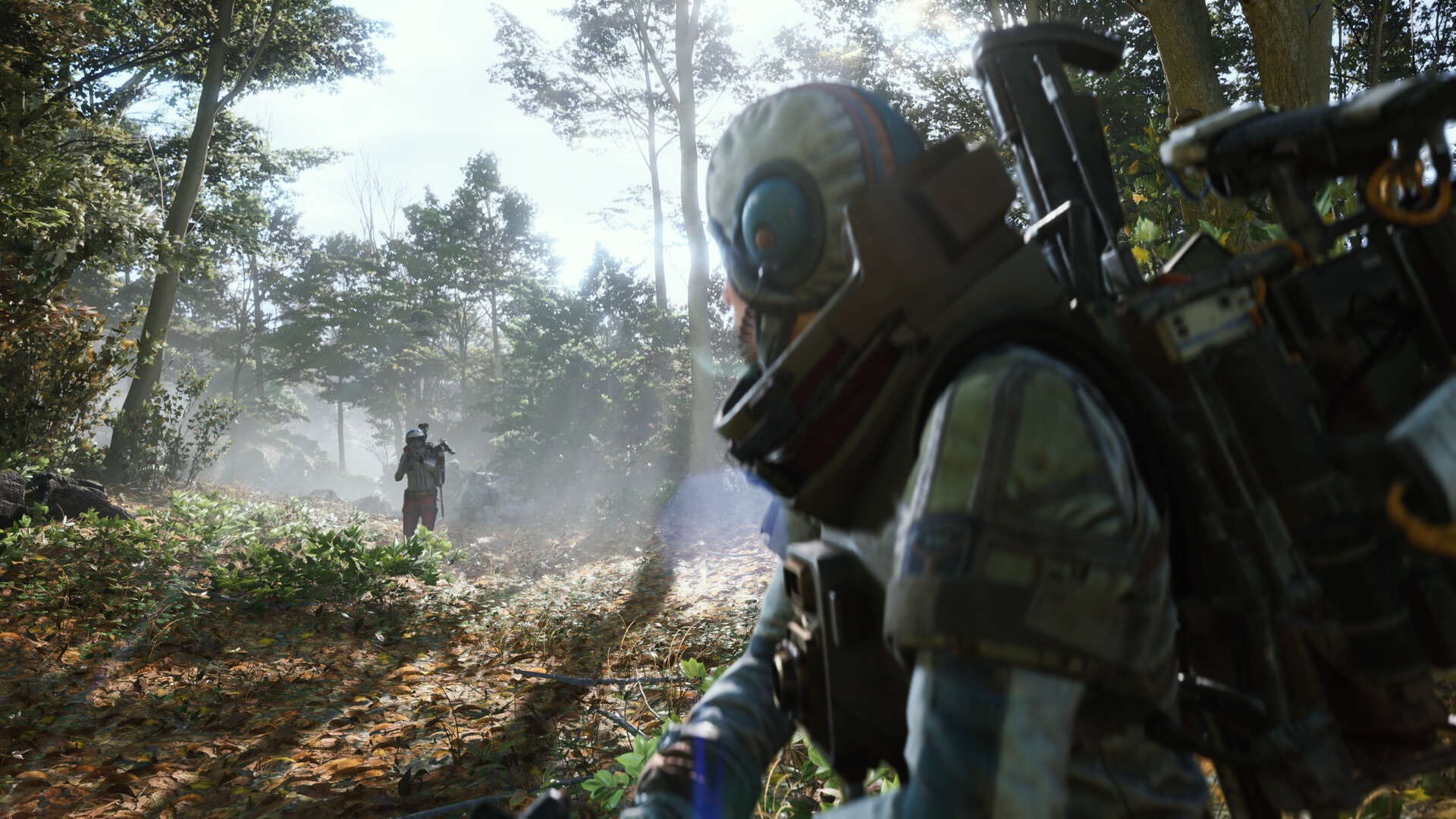
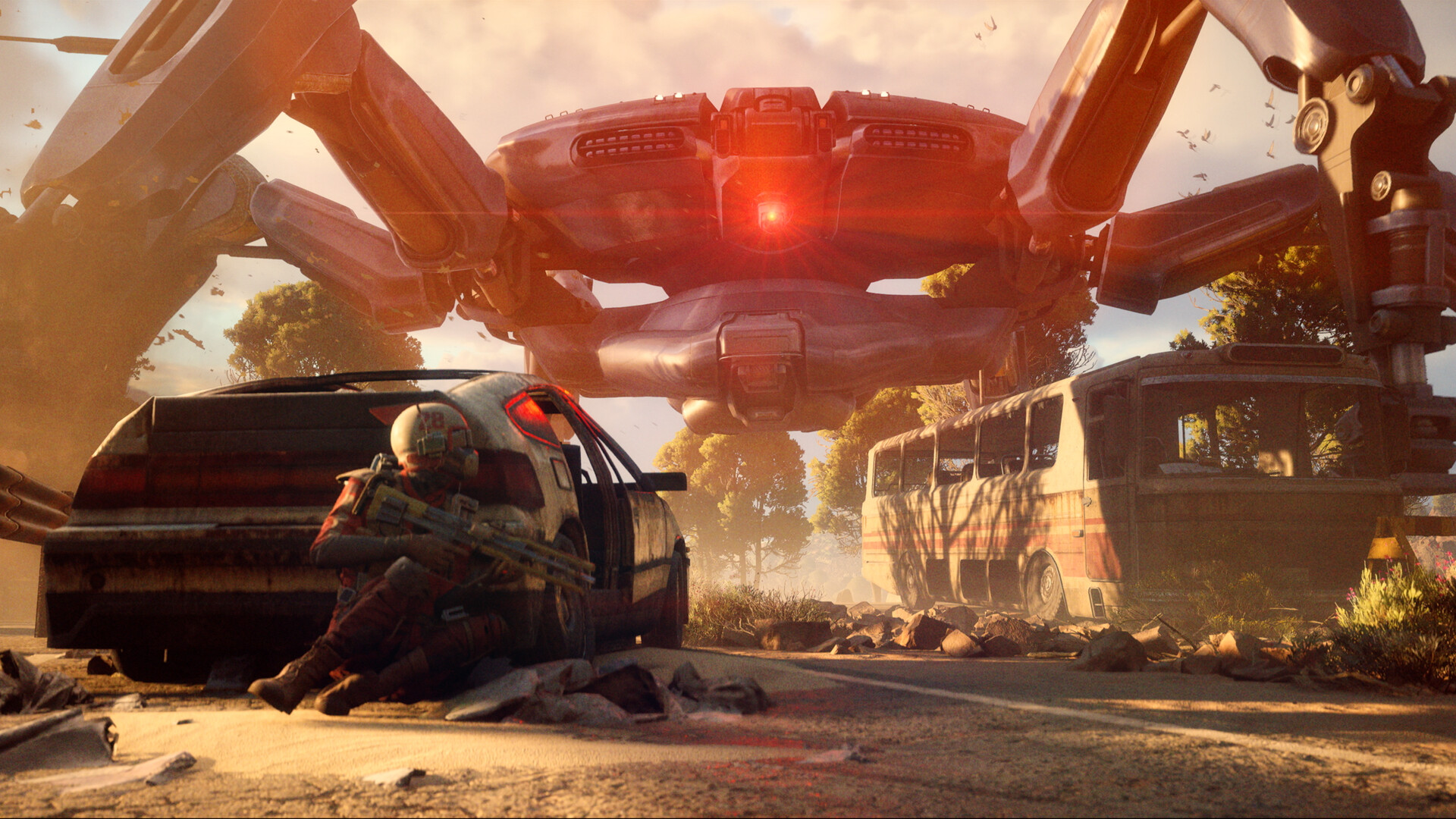
Arc Raiders is a multiplayer extraction adventure set on a lethal future Earth overrun by a mechanized threat, and that structure changes how you should approach your first hours Source. The game can be played solo or in teams of two or three, so your beginner plan should cover both self-sufficient play and basic squad coordination Source.
What Crossplay and Multiplayer Mean in Arc Raiders
Arc Raiders crossplay and multiplayer mean you are playing a shared live match space where survival, extraction timing, and player awareness matter as much as gunskill. The practical beginner takeaway is simple: you are not just fighting AI enemies, because other Raiders can be your allies, your competition, or the reason your run collapses at the extraction point.
Because the game supports solo play as well as two- and three-player teams, your first decision is less about “which class should I pick?” and more about “what size run can I reliably survive?” Source. In a solo run, you need to be conservative, use cover heavily, and disengage from risky fights. In a duo or trio, you can assign roles on the fly: one player scouts, one player carries the objective, and one player watches flanks or controls adds from the ARC.
The most important multiplayer lesson for new players is that extraction games reward information. If you hear a distant fight, you should ask whether it is worth third-partying, whether that noise will attract ARC units, and whether the extraction timer is about to force you into a bad position. The “best” play is often not the most aggressive one; it is the one that gets you home with materials intact.
A second key point is that multiplayer is not only about squad size, but about coordination habits. For example:
- In a duo, one player can bait ARC attention while the other loots a safer route.
- In a trio, one player can stay slightly back to cover a revive or extraction push.
- In solo, you should use line of sight, rooftops, and chokepoints to break contact rather than trying to out-duel every threat.
If you come from standard shooters, this is the biggest adjustment: winning a fight is not the same as winning the run. A clean engagement that leaves you exposed near extraction can still be a bad decision. That is why Arc Raiders Crossplay and Multiplayer Explained should always be read through the lens of extraction economy, not just combat mechanics.
First-Hour Checklist
Your first hour should be spent learning the extraction loop, testing gear in low-risk situations, and building a habit of leaving with loot rather than chasing every fight. That early routine matters because Arc Raiders is a progression game where the quality of your decisions snowballs over time.
1. Finish the opening onboarding and read every core prompt
The first thing you should do is complete any tutorial or starting objectives and actually read the UI prompts for inventory, healing, ammo, and extraction behavior. If the game introduces a Practice Range or training space, use it immediately to test recoil, reload timing, and how quickly you can swap to a secondary or tool. This matters because unfamiliarity with inventory navigation gets players killed more often than aim does.
Good examples of what to test right away:
- Reload timing under pressure with your starting rifle or sidearm.
- How long it takes to open containers and move items into your stash.
- Whether your movement speed changes when carrying heavier loot.
2. Run one low-stakes solo or small-team extraction
Your first live run should be a short, controlled route focused on surviving, not on maximizing profit. Pick an area where you can move between cover points, grab a few resources, and return to extraction without crossing the entire map. If you are playing in a duo or trio, keep the route simple and avoid splitting more than a short visual distance.
The goal is to answer three beginner questions:
- How quickly do ARC patrols detect movement or noise?
- How easy is it to disengage when a fight goes bad?
- Where are the nearest safe rotation lines to extraction?
3. Build a “keep vs sell vs use” habit immediately
Every item you collect in the first hour should be mentally sorted into one of three buckets: keep for crafting, sell or recycle if the game allows it, or use immediately if it improves your next run. Beginners often hoard everything and then enter later matches under-geared because their stash is full of low-value clutter.
A good early pattern is:
- Keep obvious crafting materials and upgrade components.
- Use healing and throwables instead of saving them forever.
- Do not waste stash space on weak duplicates if better gear is available.
4. Learn one safe retreat route
Before you get greedy, identify one route that reliably gets you from a contested area to extraction using cover and terrain. This should include at least one fallback position, one place to heal, and one emergency escape angle if another team appears. A beginner who knows how to leave a fight safely has a much higher survival rate than one who only knows how to start one.
5. Spend your first materials only on what improves survival now
For the first hour, prioritize anything that increases your odds of extracting with loot intact: a stronger primary, extra healing, better ammo economy, or utility that helps disengage. Do not sink early resources into niche upgrades you will not feel immediately.
You might also like
- ARC Raiders Arc Raiders gadgets you believed useless but are op in cold snap
- Arc Raiders Hurricane Map Condition and First Wave Hidden Cache Locations: Beginner Guide
- Arc Raiders paving the way quest guide enelica building researcher flat
- Arc Raiders flickering flames event exactly needed dlc free update Beginner Guide
- Arc Raiders how unlock azimuth outfit archeologist backpack the finals crossover Beginner Guide
Resource Priority Order
Your resource priority should be survival first, consistency second, and long-term optimization third. That order prevents the classic beginner trap of crafting flashy upgrades while still dying with a backpack full of unused materials.
| Priority | What to Spend or Hoard | Why It Matters Early | Example Use Case |
|---|---|---|---|
| 1 | Healing and sustain items | Lets you survive mistakes and prolong fights | Using a heal after an ARC patrol ambush |
| 2 | Primary weapon upgrades or reliable weapon replacements | Improves time-to-kill and confidence in engagements | Replacing a weak starter gun with a more controllable option |
| 3 | Ammo and core combat utility | Keeps you active in longer runs | Carrying enough ammo to survive multiple encounters |
| 4 | Crafting and upgrade materials | Enables future power spikes | Saving parts for a key bench or gear recipe |
| 5 | Niche throwables or situational tools | Helpful, but not mandatory in the first hours | Holding a lure or area-denial item for a specific objective |
| 6 | Cosmetic or convenience spending | Low impact on survival | Skipping non-essential purchases until your loop is stable |
The correct beginner mindset is to hoard what unlocks future stability and spend what increases immediate survivability. In practical terms, that means your early stash should be biased toward materials that feed upgrades, while your active loadout should be biased toward items that help you extract safely.
A few concrete examples help make this real. If you have a choice between spending on a flashy weapon that you cannot afford to replace and buying a dependable setup plus healing, the dependable setup usually wins because extraction games punish overinvestment. If you are offered a choice between saving a rare component and using a disposable consumable that helps you finish a run, use the consumable if it meaningfully increases the odds that you return alive with the component-rich loot you already found. If your inventory is cluttered with low-value duplicates, convert them into room for a resource you will actually use on the next run.
You should also think in terms of “run efficiency.” Efficient players are not the ones who carry the most stuff; they are the ones who turn each outing into a net-positive loop. That means:
- Spending early on survivability so you can complete more successful runs.
- Hoarding upgrade materials until you know which progression path you prefer.
- Crafting only when the result clearly improves your current extraction odds.
If you want a rule of thumb, spend first on anything that prevents death, then on anything that speeds up extraction, and only then on long-term optimization. That resource order is the safest way to progress through Arc Raiders Crossplay and Multiplayer Explained without stalling your economy.
Common Newbie Mistakes and How to Fix Them
Most beginner failures come from predictable mistakes: overextending, overlooting, under-preparing, and ignoring how extraction pressure changes player behavior. The good news is that each one has a concrete fix you can apply immediately.
| Mistake | Why New Players Do It | Concrete Fix |
|---|---|---|
| Chasing every gunfight | Shooters teach aggression, but extraction games punish bad positioning | Only take fights that improve your escape angle or objective control |
| Hoarding loot until death | Players fear “wasting” items before they know what is valuable | Set a simple keep/use/sell rule and empty clutter after each successful run |
| Ignoring audio and sightlines | New players focus on targets instead of threat direction | Pause before entering open ground and scan for patrols, rooftops, and flank routes |
| Splitting too far from teammates | Teams assume more spread equals better coverage | Stay close enough to revive, share information, and collapse on targets quickly |
| Wasting consumables | Beginners save healing and utility for “later” | Use healing early if it prevents a failed extraction, and use utility to control the fight now |
Mistake 1: Overcommitting to fights you do not need
Players fall into this trap because standard shooters reward momentum and eliminations, but here the real objective is extracting with value. The fix is to ask a simple question before engaging: “Does this fight help me leave richer or safer?” If the answer is no, rotate away, break line of sight, or force the enemy to commit first.
Mistake 2: Looting while unsafe
Looting in the open is one of the fastest ways to throw a successful run. New players see a container, assume it is free value, and forget that another squad may be listening to every footstep. The fix is to loot only after you establish cover, clear nearby threats, and decide where you will run if contact arrives.
Mistake 3: Treating the squad like three solo players
This happens because many beginners understand their own kit but not the team’s combined spacing. The fix is to assign simple roles before the run: one loots, one covers, one watches the approach. In a duo, call out who is front and who is rear; in a trio, make one person the “reset” player who protects revives and disengages.
Mistake 4: Ignoring extraction timing
A lot of players survive the early game and then lose everything because they linger too long. The fix is to decide your exit window before the run becomes messy. If you already have enough good loot, leave sooner rather than trying to turn a decent run into a perfect one.
Mistake 5: Using resources too late
Beginners often die with full healing or utility because they are waiting for the “right” moment. The fix is to use consumables proactively: heal when it stabilizes the fight, use utility when it denies a push, and spend ammunition to secure survival rather than saving it for a hypothetical better engagement.
Graduation Threshold: When You Are No Longer a Beginner
You are out of the beginner phase when you can consistently identify danger, extract with meaningful loot, and contribute to squad decisions without relying on guesswork. That transition is about reliable habits, not raw kill count.
A practical way to judge readiness is by looking for repeatable control in three areas:
- You can enter a map, gather resources, and leave without panic.
- You know when to disengage from both ARC threats and enemy Raiders.
- You can explain your route, loadout, and extraction plan before the match starts.
If you want a clearer benchmark, the game’s overall structure gives you a useful reference point. HowLongToBeat reports roughly 38.43 hours for the main story, 73.74 hours with extras, and 157.95 hours for completion Source. You do not need to “beat” that time to stop being a beginner, but those figures do show that Arc Raiders has enough depth to reward players who move beyond the first few sessions. Once you understand the extraction loop, your progress stops being random and starts being efficient.
Another useful signal is achievement behavior. Steam tracks 50 achievements, with the rarest currently unlocked by only 0.8% of players Source. That does not mean you should chase rare achievements immediately, but it does indicate that many players never graduate from the basics. If you are extracting regularly, managing resources responsibly, and taking fights on purpose rather than by accident, you are already ahead of the average new player.
You should also consider your own comfort in multiplayer situations. If you can:
- join a random squad without confusion,
- communicate danger and loot priorities clearly,
- and survive at least some contested extractions,
then you are ready for more advanced route planning, gear specialization, and team composition strategy. That is the point where beginner advice starts to fade and more specialized grid quest security sensors security content becomes relevant.
Pro Tips
Advanced play in Arc Raiders starts when you stop reacting to the map and start shaping it. These tips go beyond basic survival and help you turn neutral situations into favorable ones.
Tip 1. Use noise as information, not just warning
If you hear fighting nearby, do not rush in blindly; pause and decide whether the sound is bait, a third-party opportunity, or a trap that will pull ARC units toward you. This is especially strong when another squad is already committed and their exit route is predictable.
Tip 2. Save one escape option at all times
Whenever you move into an open lane, keep one fallback route in mind before you commit to loot or a duel. The best players do not just know where they are going; they always know where they will go if the situation collapses.
Tip 3. Rotate before the fight closes around you
If a route starts to feel crowded, rotate early instead of waiting for a perfect opening. In extraction games, late rotations are often worse than imperfect ones because the map slowly removes your safe space.
Tip 4. Treat utility as tempo control
Use grenades, lures, or other tools to decide when a fight happens rather than using them only for damage. A well-timed utility play can force enemies out of cover, break a push, or buy the seconds you need to extract.
Tip 5. Always know what you are risking
Before picking up a high-value item or taking a fight, decide what your run is worth right now. If the loot in your bag already represents a good outcome, you do not need to gamble it all for one more container.
Tip 6. In squads, call roles by action, not by theory
Say “I’m covering left,” “I’m looting,” or “I’m watching extraction” rather than discussing complicated plans mid-fight. Clear short calls work better under pressure and reduce friendly confusion.
Related Guides
These next-step articles should help once you have the basics of Arc Raiders Crossplay and Multiplayer Explained down and want to move into more specialized optimization.
- related guide — Arc Raiders Best Early Loadouts
- related guide — Arc Raiders Weapon Tier Guide
- raiders naomi kyle reviews — Arc Raiders Extraction Routes and Map Walkthrough
- related guide — Arc Raiders Solo vs Squad Strategy Guide
- picture whiteboard photo abandoned housing — Arc Raiders Beginner Crafting and Upgrade Guide
- related guide — Arc Raiders Best Utility Items for New Players
Sources
- https://store.steampowered.com/app/1808500/
- https://en.wikipedia.org/wiki/ARC_Raiders
- https://howlongtobeat.com/?q=arcraiders
- https://steamcommunity.com/stats/1808500/achievements
See also
- Arc Raiders 10 biggest regrets of a players wish i knew sooner: Beginner Guide
- Arc Raiders new steam game like minecraft dwarf delve extraction Beginner Guide
- ARC Raiders How to Complete Trials This Week Jan 5 to 12
- Arc Raiders loadout best pve pvp ferro cost free good op Beginner Guide
- Arc Raiders gamers into voice actors cl1p it with naomi kyle Beginner Guide
- Arc Raiders smoke grenade trick legal cheating pvp Beginner Guide
- Arc Raiders keeping the memory quest helmet formicai hills location
- Arc Raiders Expedition Guide: How to Complete All Expedition Steps Rewards and Reset Details
- Arc Raiders self revive kit good bad why: Beginner Guide
- Arc Raiders lost transmission spaceport control tower key Beginner Guide
Screenshots


Reviewed by
Arc Raiders Hub Editorial
Expertise: Editorial team behind Arc Raiders Hub. Content is compiled from official patch notes, community wikis, and playthrough notes, then reviewed and updated on schedule.
Sources
ARC Raiders Progression Guides →
Browse the complete progression collection and its focused guides.
Related Guides

%27/><stop offset=%271%27 stop-color=%27hsl(320,50%,18%)%27/></linearGradient></defs><rect width=%27460%27 height=%27215%27 fill=%27url(%23g)%27/><text x=%27230%27 y=%27115%27 text-anchor=%27middle%27 font-family=%27sans-serif%27 font-size=%2724%27 font-weight=%27700%27 fill=%27rgba(255,255,255,0.85)%27>App 1808500</text><text x=%27230%27 y=%27142%27 text-anchor=%27middle%27 font-family=%27sans-serif%27 font-size=%2711%27 fill=%27rgba(255,255,255,0.6)%27>no image yet</text></svg>)
🔥 Popular Guides
arc raiders patch notes april 21: Patch Notes Explained
ARC Raiders April 21 patch explained: Store Update 1.43.0, Roamer Set, Phantom Targets Event, delayed rotation, and player action items.
ARC Raiders Beginner Guide: Getting Through the First Hours
Learn early survival, resource priorities, and enemy behavior tips for ARC Raiders beginners.
arc raiders kettle nerf patch notes: Patch Notes Explained for Store Update 1.43.0
Store Update 1.43.0 adds Roamer Set and Phantom Targets event, with restart-required rollout details and player actions.
ARC Raiders patch notes and updates: Store Update 1.43.0 explained
Store Update 1.43.0 adds the Roamer Set, Phantom Targets Event, and Anomalia Outfit. Learn what changed and what to do now.
📋 Patch Notes & Updates
🛠️ Popular Tools
Was this guide helpful?
Rate this guide so we can improve it.
Share your own tip
Found something not in the guide? Submit it below — our editors review every tip before publishing. No account required.