 Arc Raiders
Arc Raiders Damage ARC using Heavy Ammo Weapons Beginner Guide
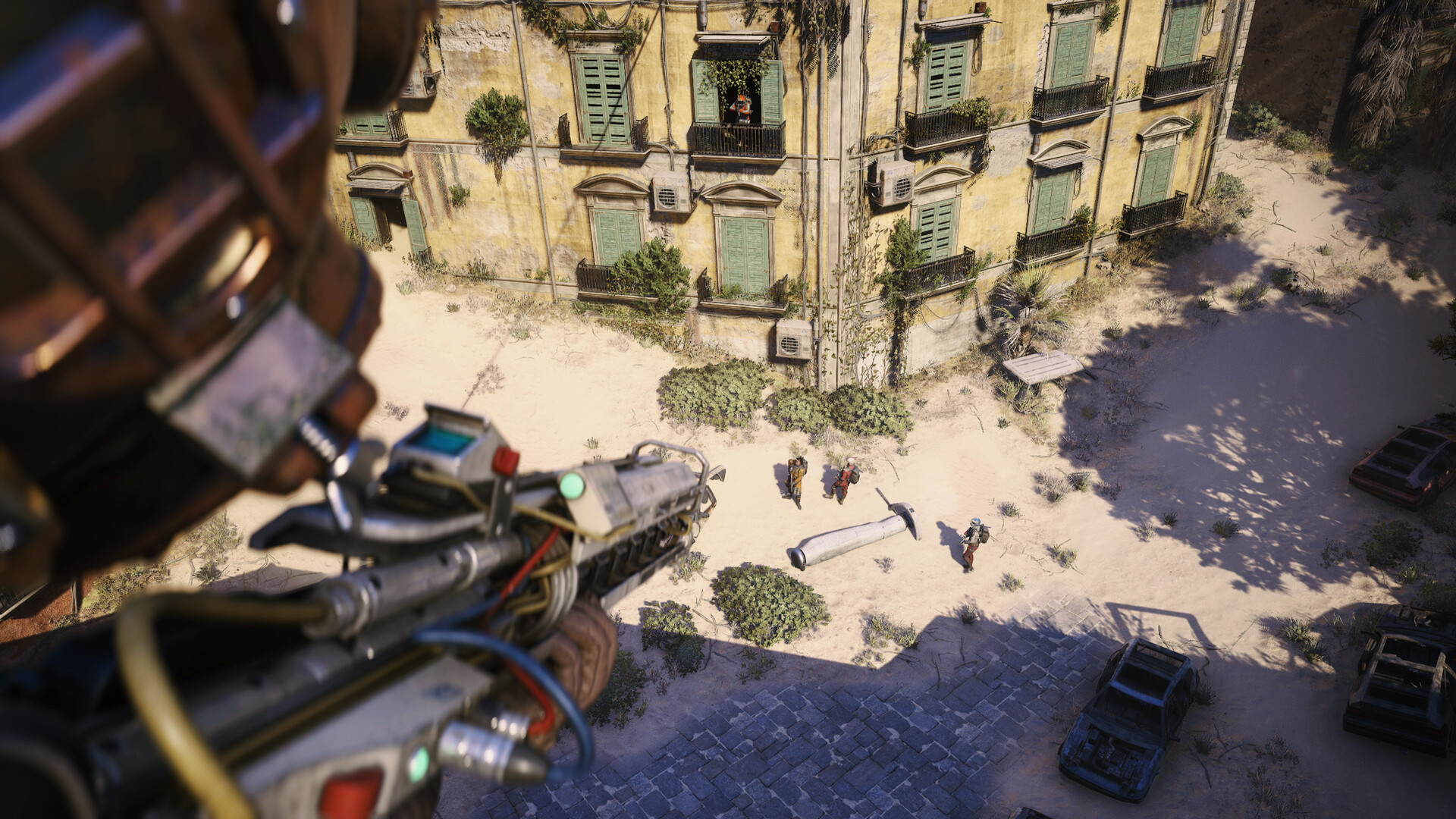
Quick Answer: Arc Raiders Damage ARC using Heavy Ammo Weapons is about using slow, hard-hitting guns to delete ARC units efficiently, survive extraction pressure, and learn when to save ammo, take cover, and finish fights instead of spraying.
ARC Raiders is a multiplayer extraction adventure set on a lethal future Earth overrun by mechanized ARC threats, and that makes early weapon choice matter a lot more than in a typical shooter Source. If you are new, heavy ammo weapons are one of the safest ways to learn target priority because they reward deliberate shots, punish bad positioning, and help you break armor or weak points without wasting your entire stash.
What Heavy Ammo Weapons Do Best in Arc Raiders
Heavy ammo weapons are the beginner-friendly way to deal reliable damage to ARC units when you want fewer shots that hit harder. In practice, that means they shine when you are fighting sturdier machines, shooting exposed components, or cleaning up enemies after your squad has already drawn attention. They are not the answer to every problem, but they are an excellent answer to the question, “How do I stop feeling useless when ARC shows up?”
The core idea is simple: heavy ammo weapons usually trade rate of fire, recoil comfort, or mobility for better impact per shot. That makes them valuable in ARC Raiders because extraction fights rarely give you the luxury of infinite ammo or long, safe lanes. If you can land a clean opening shot on a machine’s weak area, you often save more resources than you would by dumping an entire magazine of lighter rounds.
Where they feel strongest
- Against durable ARC enemies that do not fold to a few panic shots.
- When you have cover and a firing lane, such as rooftops, broken walls, or ridgelines.
- When the team can call targets, letting you focus on one threat at a time instead of spreading damage.
- During short peeks, where one accurate trigger pull matters more than sustained spray.
- In low-ammo situations, because every hit has more value.
Where beginners misuse them
- Trying to hip-fire while running in the open.
- Treating them like an all-purpose close-range panic weapon.
- Firing at armored plates instead of exposed parts.
- Burning through reserve ammo on small targets that could be avoided.
Heavy weapons are also a good fit for learning the game’s bigger rhythm. ARC Raiders is an extraction shooter, so survival, loot choice, and positioning all matter as much as raw gun skill. That is why the best beginner mindset is not “How do I win every duel?” but “How do I spend the fewest resources for the most useful outcome?” Heavy ammo naturally teaches that lesson.
If you want the shortest possible summary: use heavy ammo weapons when you need disciplined damage, save lighter tools for flexible movement fights, and do not waste big bullets on enemies you can bypass, stun, or outplay.
First-Hour Checklist for New Raiders
Your first hour should be spent unlocking comfort, not chasing perfect gear. The goal is to leave your very first sessions with enough map familiarity, ammo awareness, and survivability habits that you stop panic-playing every encounter. A strong opening hour in ARC Raiders is less about finding a rare weapon and more about building a repeatable loop: spawn, scout, loot, fight only when needed, and extract with something useful.
1. Learn one extraction loop before you loot aggressively
Pick one route from spawn to extraction and repeat it a few times. In your first hour, focus on a single pattern like:
- move from cover to cover,
- identify loud ARC patrols,
- loot only in short windows,
- disengage early if you attract too much attention,
- and extract before greed turns into a wipe.
Good early examples are “fight around a half-broken structure, loot the immediate area, then leave” or “cross open ground only after the local ARC pathing has moved away.” The point is not to become a map speedrunner on day one. The point is to stop getting trapped by the environment while you are still learning sound cues and enemy behavior.
2. Use the practice space or low-risk fights to test heavy ammo handling
If the game gives you a safe place to experiment, use it. Fire your heavy ammo weapon at stationary or predictable targets, then practice two things: first-shot accuracy and recoil recovery. You want to learn what happens when you take a shot from standing, crouched, or from a quick peek. Even a simple “peek, shoot, reposition” drill pays off immediately once actual ARC units start pressuring you.
Examples of what to test:
- firing from a doorway,
- taking one shot before retreating behind a wall,
- swapping to a backup tool when reloading would be too slow.
3. Spend the first drops on survivability and ammo confidence
Do not hoard every consumable so hard that you never use them. Your first hour is the best time to burn common items that help you survive and learn. If you have a healing item, a throwable, or a utility tool that makes a fight safer, bring it. The purpose of early resources is to teach you how fights actually feel under pressure.
4. Keep a mental note of threat types
As you explore, pay attention to the enemies that force you to change plans. A small drone you can ignore is very different from a machine that pins you in place or punishes bad cover. You should walk away from hour one able to answer three questions:
- Which ARC enemies make noise before they attack?
- Which ones are safe to bypass?
- Which ones demand heavy ammo or team focus?
5. End the first hour with a clean extraction, not a heroic stand
A first-hour success is extracting with a few useful items and no panic-induced death spiral. If you can leave with ammo, healing, and one or two upgrades, you are already ahead of the average beginner who stays too long and loses everything.
First-hour checklist at a glance
| First-hour action | Why it matters | Beginner mistake it prevents |
|---|---|---|
| Repeat one safe route | Builds map memory fast | Wandering into open ground |
| Test heavy ammo shots | Teaches recoil and pacing | Spraying expensive rounds |
| Bring basic utility | Increases survival margin | Hoarding items until death |
| Learn threat sounds | Improves reaction time | Getting surprised by ARC |
| Extract early once loaded | Preserves progress | Greedy full-loss runs |
If you only remember one thing from the first hour, remember this: the most valuable early skill is not aim, it is leaving before a bad fight becomes a disaster. That mindset pairs perfectly with heavy ammo weapons because each shot should feel intentional, not frantic.

You might also like
- Arc Raiders Hurricane Map Condition and First Wave Hidden Cache Locations: Beginner Guide
- Arc Raiders 10 biggest regrets of a players wish i knew sooner: Beginner Guide
- Arc Raiders paving the way quest guide enelica building researcher flat
- Arc Raiders how unlock azimuth outfit archeologist backpack the finals crossover Beginner Guide
- Arc Raiders flickering flames event exactly needed dlc free update Beginner Guide
Resource Priority Order: What to Spend, Hoard, and Craft First
Your resource priority should favor consistency first, power second, and luxury last. Beginners in extraction games often do the opposite: they spend rare materials too early, save “good” items until they never use them, or craft flashy gear that does not solve the real problem, which is surviving enough raids to learn the game.
In ARC Raiders, especially if you are trying to deal ARC damage with heavy ammo weapons, your early economy should protect three things: ammo availability, extraction reliability, and the ability to keep fighting after a mistake. That means you should avoid turning every reward into immediate upgrade bait.
Spend first on practical survival tools
The first things to spend on are the items that keep your run alive long enough to matter. If you can choose between a marginal weapon upgrade and something that helps you survive one more bad encounter, choose survival. That includes:
- healing or recovery items,
- utility that helps you disengage or reposition,
- ammo for your favorite heavy weapon,
- and any basic kit that reduces panic during extraction.
Why this comes first: heavy ammo weapons are best when you are calm and set up. If you are constantly out of healing or ammo, you will start taking desperate fights and wasting your strongest shots on bad engagements.
Hoard rare crafting ingredients until you know your preferred playstyle
The second priority is to keep uncommon crafting materials until you know whether you are a solo scavenger, a duo support player, or a squad damage dealer. Many beginners waste rare pieces on a weapon they immediately outgrow. Instead, wait until you know whether your favorite fight is:
- long-range ARC elimination,
- close-range ambush play,
- or objective-focused looting under pressure.
If you are leaning into Arc Raiders Damage ARC using Heavy Ammo Weapons, that decision matters even more. Heavy ammo guns often benefit from deliberate support choices rather than random upgrades. You want materials that improve uptime, reload comfort, or survivability around the weapon’s weaknesses.
Craft or upgrade only after a weapon proves itself in live runs
Do not craft a heavy weapon just because it sounds powerful in the menu. Use it in actual raids first if possible. A weapon that feels amazing on paper may be too slow for your playstyle or too expensive to support. Better examples of a sensible test cycle are:
- run one map with a borrowed or basic version,
- see how often you can land safe shots on ARC weak points,
- note whether you run out of ammo before the extraction window,
- then commit resources only if the weapon consistently solves problems.
A simple beginner priority ladder
| Priority | What to do | What to delay |
|---|---|---|
| 1 | Buy or keep survival essentials | Luxury upgrades |
| 2 | Maintain enough ammo for your main weapon | Crafting multiple side builds |
| 3 | Hold rare materials | Spending on untested gear |
| 4 | Upgrade a proven heavy weapon | Chasing the “best” weapon blindly |
| 5 | Expand into alternate loadouts | Collecting niche items too early |
The hoard-vs-spend rule that saves beginners
If an item helps you extract more often, spend it. If an item only sounds impressive, hoard it until a build proves it deserves investment. That rule keeps your stash healthy and your raids stable. It also prevents the classic beginner trap of entering a raid underprepared because all your best resources are sitting unused in storage.
A good practical benchmark is this: if you die with a resource three or four times in a row because you were “saving it,” you are probably hoarding too hard. If you spend a resource and it directly helps you extract, survive, or secure a valuable objective, it earned its place.
Common Mistakes New Players Make With Heavy Ammo Weapons
Beginners often lose more fights to bad habits than to bad aim. Heavy ammo weapons punish sloppy play faster than flexible light weapons, which is why new players sometimes blame the gun when the real issue is their positioning, timing, or target choice.
1. Shooting armored plates instead of weak points
Players do this because heavy shots feel strong, so they assume every hit is efficient. The fix is to pause for one beat and aim at the exposed component, head, joint, or damageable side of the ARC unit. A clean shot on a weak point is usually worth far more than a rushed hit on thick plating.
2. Standing still for too long after firing
New players often plant their feet to “make the shot count,” then get punished by return fire, flanks, or machine movement. The fix is a peek-and-reset rhythm: step out, fire, step back. Two examples that help are doorway peeks and short rooftop exposures. If you cannot reposition, you are probably too exposed.
3. Burning heavy ammo on tiny or avoidable threats
This happens because the weapon feels powerful and beginners want to use it constantly. The fix is to assign your heavy gun to the targets that justify it: sturdier ARC units, priority threats, or enemies that are already isolated. If a weak enemy can be bypassed, stunned, or handled with a cheaper tool, do that instead.
4. Forgetting that extraction is the real win condition
Many beginners win a fight and still lose the run because they stay too long to loot or chase one more enemy. The fix is to treat the extraction timer and route as part of the fight. If the area gets louder, your health gets low, or your ammo starts running thin, stop playing for more loot and start playing for the exit.
5. Over-investing in a single weapon before learning alternatives
Heavy ammo can become a crutch if you refuse to learn a backup plan. The fix is to keep at least one alternate tool path in mind, whether that is a lighter sidearm, a utility item, or a squadmate who covers your weaknesses. Good runs in ARC Raiders are built on adaptability, not on one perfect gun.
6. Fighting every ARC encounter head-on
Players often assume every machine must be destroyed. That leads to unnecessary ammo loss and noise. The fix is to ask three questions before engaging: Do I need this loot? Can I slip past? Can I wait for the patrol to move? If the answer to any of those is yes, fighting may be optional.
7. Reloading in the open after every shot
Heavy ammo weapons often have slower reloads or more commitment per shot, so reloading at the wrong time can get you pinned. The fix is to reload only after repositioning or behind cover, especially after a fight where another ARC unit might still be active nearby.
Concrete examples of fixing these mistakes
- If a drone is circling above and a larger threat is already engaged, save the heavy ammo for the larger threat and let the drone be handled later.
- If you are holding a street corner, fire once, break line of sight, and relocate to a second angle instead of repeating the same peek.
- If your ammo count drops low, leave the area after the current objective rather than looting a second building “just because.”
These mistakes are common because heavy weapons make beginners feel powerful fast. The correction is simple but important: power is only useful when it is spent in the right place.
Pro Tips for Better ARC Damage and Safer Extractions
Advanced play with heavy ammo weapons is mostly about efficiency. Once you stop making beginner errors, the next improvement comes from choosing fights that let your damage matter more than your enemy’s. These tips are especially useful if you want Arc Raiders Damage ARC using Heavy Ammo Weapons to feel stable in real raids rather than just impressive in theory.
Tip 1. Use the environment as a damage multiplier
If a machine has to walk through a narrow lane, your heavy shot becomes much more valuable. Fight from doorways, broken windows, elevated ledges, and rubble piles that limit how quickly ARC can close distance. A single well-timed shot from cover is often worth more than three shots in the open.
Tip 2. Open on priority targets, not the nearest one
The closest enemy is not always the most dangerous. If one ARC unit can pin you while another controls the area, hit the controller first. Example setups include a larger machine backing up smaller drones, a hostile unit near your extraction path, or an enemy that forces you out of cover. The rule is simple: spend your heavy ammo where the fight becomes easier afterward.
Tip 3. Pre-plan your reload windows
Heavy ammo weapons feel much stronger when you already know where you will reload. Before a fight starts, identify the closest hard cover and the second-best fallback position. That way, when you fire your last round, your next action is automatic instead of panicked.
Tip 4. Treat sound as early warning, not background noise
ARC Raiders gives you valuable information through movement and combat audio. Learn what “incoming” sounds like before you see the threat. If a patrol sound changes, if machine movement gets louder, or if the area starts feeling crowded, that is your signal to stop looting and reset position.
Tip 5. Carry a plan for long walks after a successful fight
Beginners often die after winning because they are low on ammo or health while still far from extraction. When you finish a fight, immediately ask: “Can I survive the walk out?” If the answer is uncertain, spend a healing item, rotate to safer terrain, and avoid new fights unless the loot is worth the risk.
Tip 6. Use heavy ammo to create space, not just to kill
Sometimes the best shot is the one that forces ARC to move, stagger, or turn away from your team. That space lets a teammate reload, flank, or disengage. In squad play, your value often comes from controlling the flow of the encounter rather than chasing every final hit.
Tip 7. Keep one mental rule for ammo economy
If the target will not materially change your extraction chances, do not spend your best rounds on it. That could mean skipping a small machine, avoiding a prolonged fight, or switching to a cheaper answer when the situation is already stable.
These are the habits that separate “I can use a heavy weapon” from “I can consistently win with one.” They make your damage more meaningful because they tie each shot to a real purpose.
Graduation Threshold: When You Are No Longer a Beginner
You are out of the beginner phase when you can enter a raid, make resource-efficient decisions under pressure, and extract often enough that your gear stops feeling fragile. In other words, you graduate when your habits become more reliable than your luck.
A beginner usually asks, “What gun should I use?” A non-beginner asks, “What fight is worth the ammo, and how do I leave with profit?” That mindset shift is the true milestone. If heavy ammo weapons are still your main choice, that is fine. The goal is not to abandon them; it is to use them intentionally.
Signs you have graduated
- You can identify when an ARC fight is optional.
- You reload behind cover without thinking about it.
- You know which loot items are worth carrying out and which are not.
- You stop overcommitting after a successful kill.
- You can survive a bad spawn or awkward rotation without panicking.
Signs you are still in the beginner phase
- You engage every patrol you see.
- You burn rare ammo immediately.
- You loot until the extraction route becomes dangerous.
- You forget to check your fallback position before firing.
- You blame weapon balance when the real issue is bad positioning.
A practical self-test
If you can do the following in consecutive raids, you are probably ready to move beyond beginner advice:
- survive the opening minute without sprinting into danger,
- land deliberate heavy ammo shots on meaningful targets,
- leave a risky area before it becomes a disaster,
- extract with resources you actually plan to use,
- and repeat that process more than once.
Another good sign is that you start thinking in terms of roles. Maybe you are the player who breaks ARC armor from mid-range, or the one who holds an angle while teammates move. Once you can explain your own job in a fight, you are no longer just reacting.
For long-term goals, the broader game also supports much deeper play: ARC Raiders has plenty of room for experimentation, and external trackers show meaningful completion depth. HowLongToBeat lists roughly 38.43 hours for the main story, 73.74 hours with extras, and 157.95 hours for completion Source. That is a strong sign that the game is built for players who want to master systems over time rather than rush one perfect loadout.
Related Guides
- grid quest security sensors security ARC Raiders early-game tier list for weapons and utilities
- related guide Best solo loadouts for safe extraction runs
- arc raiders naomi tips ARC Raiders beginner walkthrough for your first maps
- related guide Heavy ammo weapon build guide for ARC damage
- picture whiteboard photo abandoned housing Best ways to farm crafting materials early
- related guide Squad roles and team coordination guide
- arc raiders arc raiders gadgets ARC enemy weak points and combat tips
Sources
- https://store.steampowered.com/app/1808500/
- https://howlongtobeat.com/?q=arcraiders
- https://www.metacritic.com/game/arc-raiders
See also
- ARC Raiders How to Complete Trials This Week Jan 5 to 12
- Arc Raiders loadout best pve pvp ferro cost free good op Beginner Guide
- Arc Raiders new steam game like minecraft dwarf delve extraction Beginner Guide
- Arc Raiders gamers into voice actors cl1p it with naomi kyle Beginner Guide
- Arc Raiders keeping the memory quest helmet formicai hills location
- Arc Raiders what to do with breathtaking snow globe epic trinket: Beginner Guide
- Arc Raiders how damage arc enemies in old town trials guide
- Arc Raiders Expedition Guide: How to Complete All Expedition Steps Rewards and Reset Details
- Arc Raiders Beginner Guide
- Arc Raiders blue gate village key get use Beginner Guide
Screenshots


Reviewed by
Arc Raiders Hub Editorial
Expertise: Editorial team behind Arc Raiders Hub. Content is compiled from official patch notes, community wikis, and playthrough notes, then reviewed and updated on schedule.
Sources
ARC Raiders Progression Guides →
Browse the complete progression collection and its focused guides.
Related Guides
%27/><stop offset=%271%27 stop-color=%27hsl(320,50%,18%)%27/></linearGradient></defs><rect width=%27460%27 height=%27215%27 fill=%27url(%23g)%27/><text x=%27230%27 y=%27115%27 text-anchor=%27middle%27 font-family=%27sans-serif%27 font-size=%2724%27 font-weight=%27700%27 fill=%27rgba(255,255,255,0.85)%27>App 1808500</text><text x=%27230%27 y=%27142%27 text-anchor=%27middle%27 font-family=%27sans-serif%27 font-size=%2711%27 fill=%27rgba(255,255,255,0.6)%27>no image yet</text></svg>)

🔥 Popular Guides
arc raiders kettle nerf patch notes: Patch Notes Explained for Store Update 1.43.0
Store Update 1.43.0 adds Roamer Set and Phantom Targets event, with restart-required rollout details and player actions.
ARC Raiders patch notes and updates: Store Update 1.43.0 explained
Store Update 1.43.0 adds the Roamer Set, Phantom Targets Event, and Anomalia Outfit. Learn what changed and what to do now.

ARC Raiders arc raiders patch notes today: Patch Notes Explained
Store Update 1.43.0 adds the Roamer Set and Phantom Targets event, with the reward window running until September 06.
ARC Raiders Beginner Guide: Smart Start, Safe Progress, and Early Wins
Learn the best first-hour checklist, resource priorities, common mistakes, and when you’re no longer a beginner in ARC Raiders.
📋 Patch Notes & Updates
🛠️ Popular Tools
Was this guide helpful?
Rate this guide so we can improve it.
Share your own tip
Found something not in the guide? Submit it below — our editors review every tip before publishing. No account required.