 Arc Raiders
Arc Raiders Destroy ARC enemies in the Swamp: Beginner Guide
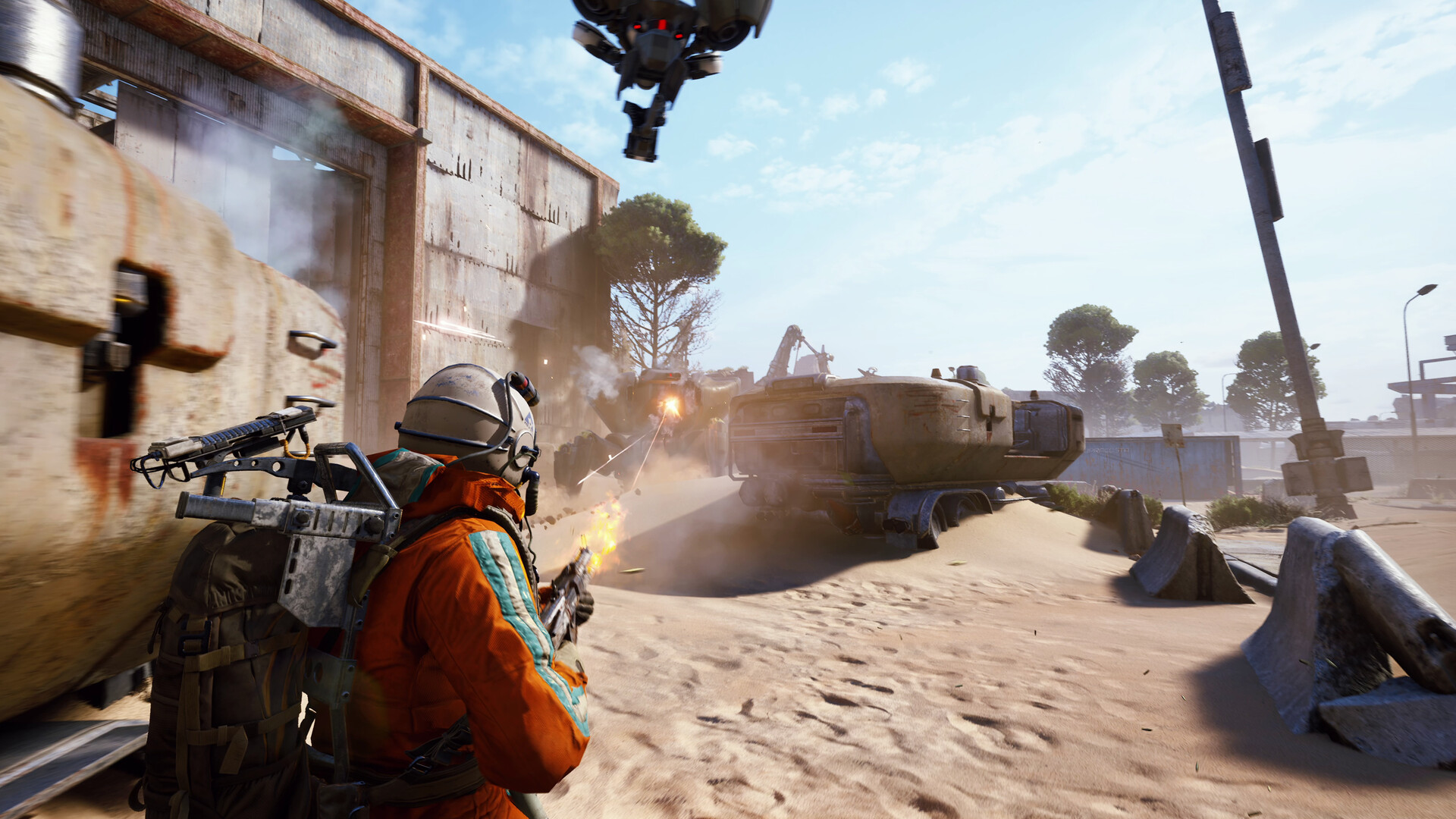
Quick Answer: In Arc Raiders, destroy ARC enemies in the Swamp by moving slowly, using cover, isolating drones, and prioritizing weak points with cheap tools first. The swamp punishes noise and greed, so patience wins more fights than raw firepower.
Getting Started in the Swamp
Arc Raiders is an extraction shooter, so the swamp is less a “combat zone” and more a “please don’t make eye contact with the murder robots” zone. Your first goal is not to clear every ARC you see. Your first goal is to survive long enough to learn what the enemies do, what the terrain hides, and how to leave with loot still in your pockets.
The swamp area, like other early zones, tends to teach three things very quickly: visibility is bad, movement is clumsy, and ARC enemies often punish anyone who sprints in straight lines. That means beginners should treat every encounter as a setup puzzle. If you are trying to destroy ARC enemies in the Swamp, you should think in terms of angles, escape routes, and “how many seconds until something bigger hears this?”
A strong beginner mindset in the swamp looks like this:
- You spot an ARC patrol before it spots you.
- You break line of sight before opening fire.
- You pick off one unit at a time instead of taking the whole squad on at once.
- You leave when the inventory is good, not when the area is “fully cleared.”
- You extract with mats, ammo, and a little dignity intact.
That last part matters because Arc Raiders is built around extraction, not arena-style wave clearing. Steam describes it as a “multiplayer extraction adventure” set on a “lethal future earth” with a mechanized ARC threat Source. That framing is the big beginner lesson: the swamp is a place to farm experience, not to prove you are the hero in a robot apocalypse documentary.
If you keep losing fights in the swamp, the fix is usually not “get better aim” as much as “stop taking bad fights.” A beginner who understands when to disengage will progress much faster than one who tries to brute-force every encounter like it is a bot lobby with worse landscaping.
First-Hour Checklist
Your first hour should be spent learning extraction flow, testing gear, and practicing safe ARC kills in low-risk fights. The goal is to get comfortable enough that the swamp stops feeling like an ambush generator and starts feeling like a route you can read.
1. Finish the earliest onboarding and practice anything available
If the game offers a tutorial, a training ground, or a practice range, do it immediately. Use it to test how your starter weapon feels against light targets, how recoil behaves when you strafe, and whether your melee or utility tools are worth keeping on your hotbar. If there is a practice area with multiple weapon types, use it exactly the way real beginners should:
- Try a basic rifle for mid-range taps.
- Try a close-range option for panic defense.
- Test a throwable or tool on a moving target.
- Practice reloading behind cover instead of out in the open.
This is the easiest place to learn without paying the “oops, that was my best backpack” tax.
2. Run a short, low-stakes swamp raid
Your first real raid should be a short one. Enter the swamp with the simple mission of identifying:
- where extraction points tend to be,
- what kind of ARC patrols appear near water or reeds,
- how quickly you can break away if a fight turns ugly,
- and which terrain features help you flank or hide.
Do not try to full-clear the zone. Loot a nearby structure, cut down one or two ARC enemies if they are isolated, and extract before your inventory gets ambitious.
3. Check every starter item and decide what not to waste
In extraction games, beginners often waste good consumables “just in case.” Don’t. If you have healing, ammo, shields, grenades, or crafting parts, identify which ones are common and which ones are your emergency button. Your first hour should end with a simple rule set like:
- use common healing freely, but not carelessly,
- save rare upgrades for harder fights,
- keep your best throwable for escape or boss-tier threats,
- and never spend something expensive on a fight you can avoid.
4. Learn the “fight or leave” signal
A lot of first-hour deaths happen because players keep shooting after the fight stops being profitable. Your personal stop signal should be something like:
- a second ARC patrol joins the first,
- you take armor or health damage and don’t have cover,
- a louder enemy starts investigating,
- or your extraction timer/route gets unsafe.
The swamp is especially good at turning a “small skirmish” into a “why are there six metal beetles here” disaster. Learn to disengage early.
5. Bank your first successful loot run
Once you finish one clean raid, don’t immediately chase a bigger one. Bank what you got, sort your inventory, and identify what actually helped. If you extracted with materials you can craft from, keep them. If you picked up ammo you never used, maybe you overbought your confidence. That’s fine; everyone does it once. Some people do it for a hobby.
6. Re-enter with one deliberate goal
Your second or third run should test a single new thing, such as:
- fighting a patrol from high ground,
- taking a swamp route at night or in low visibility,
- using a different weapon archetype,
- or looting deeper while keeping one extraction route open.
That small-step method builds real awareness fast. It also keeps the swamp from becoming a blur of panic, respawn, and regret.
You might also like
- ARC Raiders Arc Raiders gadgets you believed useless but are op in cold snap
- Arc Raiders Hurricane Map Condition and First Wave Hidden Cache Locations: Beginner Guide
- Arc Raiders groundbreaking quest building picture whiteboard photo abandoned housing project Beginner Guide
- Arc Raiders paving the way quest guide enelica building researcher flat
- Arc Raiders how unlock azimuth outfit archeologist backpack the finals crossover Beginner Guide
Resource Priority Order
Your best resource order is to secure survival tools first, then the materials that let you repeat successful runs, and only then the flashy upgrades that sound good in the menu. The swamp is a great place to learn this because it tempts you with loot while quietly punishing overinvestment.
Here is a practical priority order for beginners:
| Priority | What to spend or keep | Why it matters early | Example use in the swamp |
|---|---|---|---|
| 1 | Healing and survival consumables | They save runs more often than damage boosts do | Patch up after a drone ambush behind reeds |
| 2 | Ammo and basic reload supplies | Running dry in extraction fights is a classic beginner L | Keep enough to finish a second engagement |
| 3 | Cheap crafting materials | These keep your economy moving without risking rare stock | Make more starter tools after each raid |
| 4 | Utility items that help escape | Smoke, distractions, or mobility tools reduce losses | Break line of sight when a heavier ARC arrives |
| 5 | Weapon upgrades for your favorite gun | Upgrades only matter after you know what you like | Improve the rifle you actually survive with |
| 6 | Rare materials and luxury crafting | Strong, but too expensive to mismanage early | Save for a build you have tested, not guessed |
A beginner’s biggest mistake is treating all resources as equal. They are not. In an extraction game, a “good” item is one that helps you extract more often, not one with the biggest tooltip. If a crafting part lets you keep running swamp raids after a bad extraction, that part is more valuable than a shiny upgrade you are afraid to use.
A simple hoarding rule works well:
- Spend freely on low-tier supplies that replace lost runs.
- Hoard carefully on rare components tied to upgrades.
- Craft only what you can replace after one average raid.
- Never burn your emergency items on routine encounters unless the fight is already going sideways.
For ARC enemies in the swamp specifically, prioritize anything that improves consistency. A little more ammo, a little better cover utility, and a reliable healing setup will do more for your clear rate than chasing the highest raw damage number available. Real talk: the swamp does not care about your DPS spreadsheet; it cares whether you can extract while being chased.
What to Keep vs. What to Convert
- Keep materials that unlock repeatable progress.
- Convert junk into ammo, basic healing, or starter tools.
- Save rare drops until you know the build path they support.
- Sell or dismantle duplicate low-impact gear if storage gets tight.
That order helps you avoid the common beginner trap of a full stash and no useful loadout. If your inventory looks rich but your next raid still feels scary, your resource priorities need a reset.
How to Destroy ARC Enemies in the Swamp
Destroying ARC enemies in the swamp is easiest when you treat each fight like a stealthy ambush instead of a fair duel. The swamp’s terrain gives you cover, but it also limits your movement, so the safest approach is to isolate enemies, weaken them from range, and only commit when you know where your exit is.
Read the terrain first
The swamp is full of visibility killers: reeds, mud, low light, water, and narrow approaches. Those are not just atmosphere; they are tactical tools. Before you fire, look for:
- a tree trunk or ruined wall to break line of sight,
- a raised patch of ground so you are not wading into slow movement,
- a side angle that lets you hit a patrol from safety,
- and a fallback route if a heavier ARC joins the fight.
If you stand in open water, you are basically inviting the game to humble you.
Isolate small targets
Beginner-friendly ARC fights usually start with the weakest or most separated enemy. If two drones patrol together, wait until one drifts away or turns. If a turret-like enemy is fixed in place, attack only when you know it cannot back up with another patrol. If a larger ARC unit appears, do not panic-fire everything at once; first see whether you can break one target off from the others.
Examples of good swarm control in the swamp:
- a lone drone crossing a muddy path,
- a sentry-style ARC that cannot easily move off its perch,
- a small patrol that leaves one unit exposed after turning a corner.
Use cheap damage to learn enemy reactions
The first time you fight a new ARC type, use inexpensive tools or low-commitment shots. You want to learn three things:
- how quickly it notices you,
- whether it rushes, hovers, or holds position,
- and what happens when you break its line of sight.
That knowledge is worth more than dumping your rarest ammo into a target you barely understand. If you need three attempts to learn how one ARC behaves, that is normal. If you lose three expensive kits trying to learn it, that is avoidable.
Prioritize weak points and cleanup
Arc Raiders rewards clean hits and smart follow-up. Once you start damaging an ARC, keep the pressure on its vulnerable parts if the game gives you a clear angle. If a unit is nearly down, finish it instead of swapping targets and leaving a damaged enemy to call trouble on you later.
Good swamp cleanup looks like this:
- open with a safe shot,
- reposition immediately,
- finish the target from a different angle,
- and leave before new enemies investigate the noise.
Don’t confuse “winning” with “staying”
A lot of beginners think they need to stand their ground after starting a fight. In extraction play, the true win condition is often simply “the enemy died and I lived long enough to loot.” If the fight drags on, you are probably making the swamp’s job easier.
When to disengage:
- you miss too many opening shots,
- another patrol enters hearing range,
- you run low on healing or ammo,
- or you lose track of your extraction route.
If you remember only one thing from this guide, remember this: in the swamp, the best ARC kill is the one that does not turn into a second, worse problem.
Common Mistakes
The most common newbie mistakes are overcommitting, carrying the wrong value mix, and confusing exploration with safety. The good news is that each one has a straightforward fix, and most of them disappear once you stop treating the swamp like a shooting gallery.
Mistake 1: Sprinting into open ground
Beginners do this because they want to “get there faster,” but open ground in the swamp is a giant invitation for drones and patrols to spot you.
Fix: Move in short bursts between cover pieces, use reeds and terrain breaks, and stop sprinting before you enter likely enemy sightlines.
Mistake 2: Fighting every ARC they see
Players often assume that every enemy must be cleared before they can loot, which turns a manageable route into a noisy chain reaction.
Fix: Skip any ARC that is off-route or paired with a worse position. Pick isolated targets only, and extract with good loot instead of chasing map-wide purity.
Mistake 3: Burning rare consumables too early
This happens because a stronger item feels like the “smart” play in a scary moment, even if the encounter is minor.
Fix: Save rare healing, grenades, and utility for either escape or confirmed high-value fights. Use common resources first and set a personal threshold for when a fight is truly worth the spend.
Mistake 4: Looting while unsafe
Beginners love the shiny thing on the ground right after a fight, which is exactly when the next patrol is most likely to arrive.
Fix: After combat, stop for a second, listen, and check sightlines before opening crates or containers. If the zone feels alive, move first, loot second.
Mistake 5: Ignoring extraction timing
A lot of lost runs happen because players stay “just one minute more” and then get forced into a bad route.
Fix: Decide your extraction trigger before the raid starts. For example: if you have a good backpack and one good weapon, leave. If the path gets crowded, leave. If your ammo dips too low, leave.
Mistake 6: Carrying gear you do not understand
Sometimes the starter loadout is fine, but players swap into a weapon or tool they barely tested and then blame the game when it underperforms.
Fix: Try new gear in practice or on a low-risk run first. If you cannot describe when to use the item in one sentence, you probably are not ready to rely on it in the swamp.
Mistake 7: Treating the swamp like one biome with one answer
The swamp changes how you fight depending on visibility, elevation, and patrol density. A “good plan” for a dry edge route may fail in flooded ground.
Fix: Learn three route types: a safe extraction route, a loot-heavy route, and a panic route. Switch based on what the map and enemy positions give you.
Pro Tips
These tips go beyond the beginner obvious and help you turn swamp runs from chaotic scrambles into repeatable wins.
Tip 1. Pull enemies into bad sightlines
If an ARC patrol is near a wall, tree line, or broken structure, back up until only one enemy can see you at a time. The swamp rewards enemies that are confused and punishable, not enemies that can all line up like they paid for VIP seating.
Tip 2. Shoot, reposition, then shoot again
After your first shots, move. Even a small sidestep or angle shift can make the next enemy response miss or split the patrol. This is especially strong in swamp terrain, where movement options are awkward and line of sight breaks are plentiful.
Tip 3. Use noise to create distance, not just damage
If you must fire in a risky area, think about the sound as a tool. Make the enemy react where you want it to, then leave the original angle and punish the new approach. In practice, that means shooting from cover, then relocating before the ARC response settles.
Tip 4. Save one “panic answer” at all times
Your loadout should always include one thing that fixes a bad situation quickly: a heal, a utility item, or a mobility tool. If you spend your last save button on a low-value fight, the swamp will absolutely cash that check later.
Tip 5. Learn the difference between a loot route and a combat route
Some swamp paths are for moving quietly and stealing resources; others are better for fighting because they have cover and escape options. If you try to do both on the same line, you usually end up doing neither well.
Tip 6. Stop carrying dead weight
If an item has not helped you in several runs, test replacing it. Beginners often keep “maybe useful” gear way too long. Better to run a simple kit you understand than a fancy backpack full of regrets.
Tip 7. Bank progress after one good run
A clean extraction with decent loot is a real win. Don’t immediately chase a bigger raid just because you feel warm and brave. Warm and brave is how people end up posting about the swamp on forums with a thousand-word sigh.
Graduation Threshold
You are out of the beginner phase when you can enter the swamp, identify danger quickly, and extract with a plan more often than you panic. That does not mean you have mastered every ARC enemy or every route. It means the basics are no longer consuming all your attention.
A good self-check looks like this:
- You can survive multiple swamp raids without guessing where to go.
- You know which enemies are safe to fight and which are better avoided.
- You have a consistent “entry, loot, exit” rhythm.
- You do not spend rare resources on routine threats.
- You can explain why you lost a run without saying “the game is unfair” as your only evidence.
Another sign is that your decision-making starts to feel proactive. Beginners react to what the swamp throws at them. Intermediate players start shaping encounters by choosing routes, isolating targets, and leaving before a bad situation becomes a bad story.
A more practical benchmark is consistency. If you are regularly destroying ARC enemies in the Swamp without blowing through your stash, and if your extracts are happening because you planned them rather than because you got lucky, you have probably graduated from the absolute beginner tier.
You are also ready to move on when:
- your favorite weapon feels natural without practice,
- you can manage inventory without overthinking every slot,
- and you understand how to turn one good start into a safe raid.
That is the point where bigger goals make sense: better loadout optimization, route refinement, and higher-risk encounters. At that stage, the swamp is no longer a terrifying wall. It is just another map that occasionally tries to ruin your evening.
Related Guides
- raiders naomi kyle reviews Arc Raiders Early Weapon Tier List
- related guide Arc Raiders Best Beginner Loadouts
- related guide Arc Raiders Swamp Route Walkthrough
- related guide Arc Raiders Extraction and Looting Guide
- arc raiders waking tips Arc Raiders ARC Enemy Weak Points Guide
Sources
- https://store.steampowered.com/app/1808500/
- https://howlongtobeat.com/?q=arcraiders
- https://store.steampowered.com/app/1808500/
- https://www.metacritic.com/game/arc-raiders
- https://store.steampowered.com/app/1808500/
- https://www.protondb.com/app/1808500/
See also
- Arc Raiders 10 biggest regrets of a players wish i knew sooner: Beginner Guide
- Arc Raiders flickering flames event exactly needed dlc free update Beginner Guide
- ARC Raiders How to Complete Trials This Week Jan 5 to 12
- Arc Raiders new steam game like minecraft dwarf delve extraction Beginner Guide
- Arc Raiders loadout best pve pvp ferro cost free good op Beginner Guide
- Arc Raiders gamers into voice actors cl1p it with naomi kyle Beginner Guide
- Arc Raiders keeping the memory quest helmet formicai hills location
- Arc Raiders what to do with breathtaking snow globe epic trinket: Beginner Guide
- Arc Raiders how damage arc enemies in old town trials guide
- Arc Raiders Damage ARC using Heavy Ammo Weapons Beginner Guide
Screenshots


Reviewed by
Arc Raiders Hub Editorial
Expertise: Editorial team behind Arc Raiders Hub. Content is compiled from official patch notes, community wikis, and playthrough notes, then reviewed and updated on schedule.
Sources
ARC Raiders Progression Guides →
Browse the complete progression collection and its focused guides.
Related Guides
%27/><stop offset=%271%27 stop-color=%27hsl(320,50%,18%)%27/></linearGradient></defs><rect width=%27460%27 height=%27215%27 fill=%27url(%23g)%27/><text x=%27230%27 y=%27115%27 text-anchor=%27middle%27 font-family=%27sans-serif%27 font-size=%2724%27 font-weight=%27700%27 fill=%27rgba(255,255,255,0.85)%27>App 1808500</text><text x=%27230%27 y=%27142%27 text-anchor=%27middle%27 font-family=%27sans-serif%27 font-size=%2711%27 fill=%27rgba(255,255,255,0.6)%27>no image yet</text></svg>)


🔥 Popular Guides
arc raiders kettle nerf patch notes: Patch Notes Explained for Store Update 1.43.0
Store Update 1.43.0 adds Roamer Set and Phantom Targets event, with restart-required rollout details and player actions.
ARC Raiders patch notes and updates: Store Update 1.43.0 explained
Store Update 1.43.0 adds the Roamer Set, Phantom Targets Event, and Anomalia Outfit. Learn what changed and what to do now.

ARC Raiders arc raiders patch notes today: Patch Notes Explained
Store Update 1.43.0 adds the Roamer Set and Phantom Targets event, with the reward window running until September 06.
ARC Raiders Beginner Guide: Smart Start, Safe Progress, and Early Wins
Learn the best first-hour checklist, resource priorities, common mistakes, and when you’re no longer a beginner in ARC Raiders.
📋 Patch Notes & Updates
🛠️ Popular Tools
Was this guide helpful?
Rate this guide so we can improve it.
Share your own tip
Found something not in the guide? Submit it below — our editors review every tip before publishing. No account required.